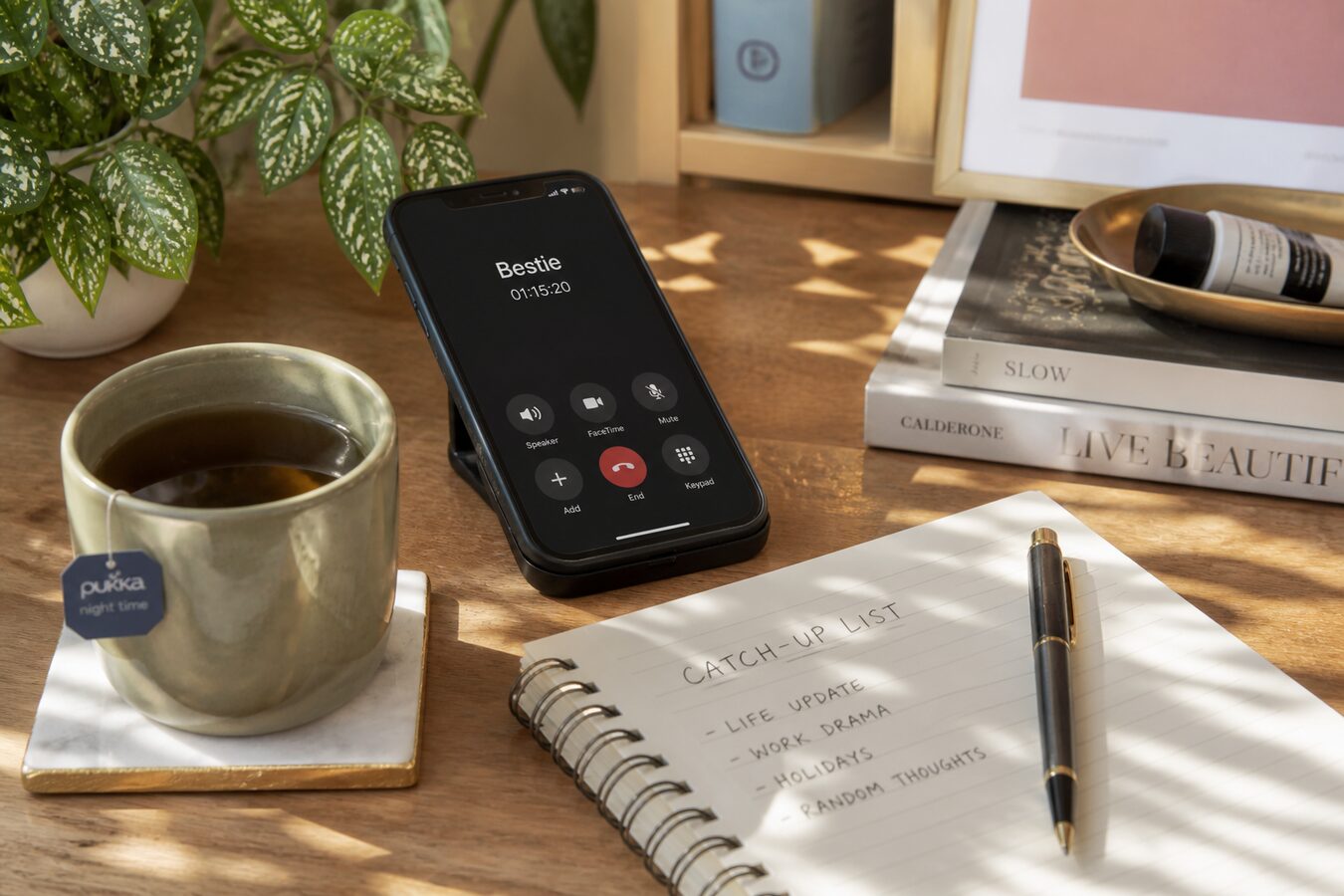
Introduction
An actual unrushed phone or video call with a friend you've been meaning to catch up with counts as a genuine wellness activity — social connection has real, measurable effects on well-being, and a scheduled call is often the only way it actually happens amid busy schedules.
The scheduling itself is the hard part; once it's on the calendar with both people committed, the conversation part takes care of itself.
At a glance
- Who it’s for
- A friend or relative with whom you want a more substantial catch-up.
- Expected cost
- $0
- Time needed
- 30-60 minutes, sometimes longer
Supplies & preparation
- calendar access
- phone or video link
- headphones optional
- quiet place
- water or tea
- a short list of questions
- time-zone check
- note pad
- follow-up reminder
Step-by-step
-
Pick the specific friend and reach out to schedule, not just 'someday'
Message them directly to find a specific date and time rather than a vague 'we should catch up soon,' which rarely turns into an actual call.
-
Check time zones if relevant
If you're in different time zones, confirm the exact local time for both of you when scheduling — a miscommunication here is a common reason calls get missed or cut short.
-
Block the time on your calendar like any other commitment
Treat the call with the same seriousness as a work meeting — block the time and protect it from being double-booked or deprioritized.
-
Find a quiet place without other tasks competing for attention
Avoid taking the call while doing chores or multitasking — being fully present, even on a call rather than in person, changes the quality of the conversation.
-
Have a couple of real questions ready, not just small talk
Think of one or two specific things to ask about — something you remember they were dealing with, a specific interest of theirs — rather than relying entirely on generic catch-up questions.
-
Let the call run long if it's going well
Don't schedule back-to-back commitments immediately after if you can avoid it — a good catch-up call often naturally wants more time than initially planned.
-
Suggest the next one before hanging up
Before ending the call, float a rough timeframe for the next one — this is what actually turns an isolated catch-up into a maintained friendship rhythm.
Common mistakes
- Leaving the catch-up as a vague intention instead of scheduling a specific date and time.
- Multitasking during the call instead of giving it full attention.
- Relying only on generic small talk instead of specific questions that show you remember details about their life.
- Scheduling something immediately after the call, cutting it short by necessity.
- Ending the call without any mention of when you'll talk again.
Variations for different budgets
Budget
A regular phone call works fine — no special tools or subscriptions needed.
Mid-range
Use video calling for a more connected feeling if you haven't seen each other in a while.
Splurge
Pair the call with a small mailed care package or a synced activity, like watching the same show and discussing it.
Practical considerations
Pick a time when you can both actually focus on the call rather than multitasking through it, and be honest if the timing turns out to be bad so you can reschedule instead of having a distracted conversation.
Printable checklist
Friendship Maintenance Call