Introduction
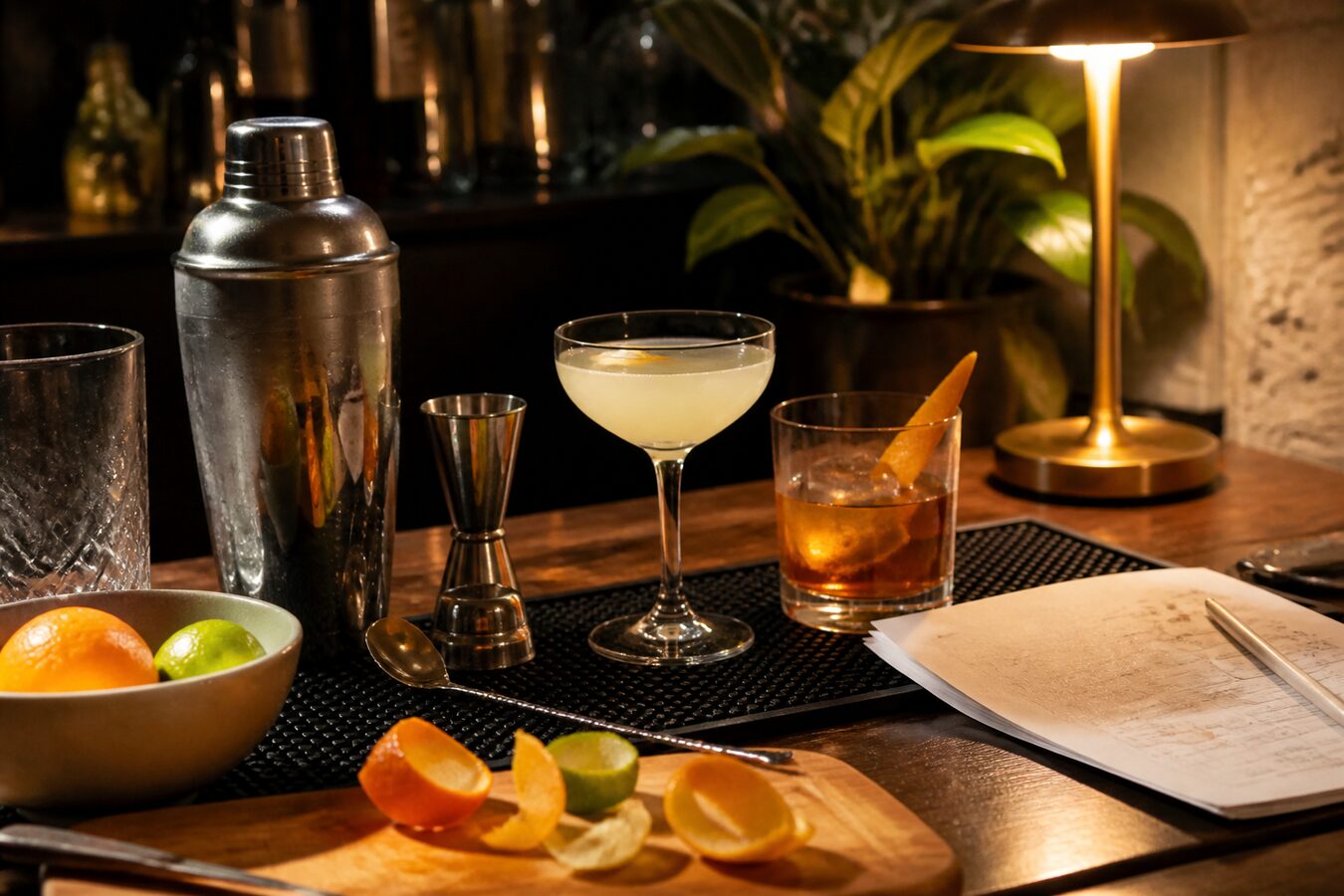
Two well-measured cocktails teach you more than a night of free-pouring ever will. Pick one stirred drink (a Manhattan or Negroni) and one shaken drink (a Daiquiri or Whiskey Sour) so you practice both core techniques in one session.
Measure every pour with a jigger, even the ingredients that feel like they don't matter. The difference between a good and mediocre cocktail is usually a half-ounce, not a better bottle.
At a glance
- Who it’s for
- People who want a measured two-drink tasting experiment to feel considered but not overproduced.
- Expected cost
- $35-$120 total; base spirits and specialty bitters or liqueurs drive cost
- Time needed
- Prep 30 minutes; active time 60-90 minutes; total about 2 hours
Supplies & preparation
- jigger
- cocktail shaker
- mixing glass
- bar spoon
- strainer
- fresh ice
- fresh citrus
- two spirits
- vermouth or liqueur
- simple syrup
- bitters
- tasting glasses
- water pitcher
- salty snack
Step-by-step
-
Pick one stirred and one shaken recipe
Choose a simple stirred drink (Negroni: equal parts gin, Campari, sweet vermouth) and a simple shaken drink (Daiquiri: 2 oz rum, 1 oz lime juice, 0.75 oz simple syrup) so you practice both techniques rather than making four variations of the same drink.
-
Measure every ingredient with a jigger
Skip free-pouring entirely for this session. A jigger takes the guesswork out and lets you actually taste what changes when you adjust one ingredient by a quarter ounce on the second round.
-
Chill glasses and use fresh ice
Put glasses in the freezer for 10 minutes before mixing, and use fresh ice for shaking rather than ice that's been sitting out. Warm glasses and stale ice dilute a cocktail faster than the recipe accounts for.
-
Stir the stirred drink, don't shake it
Stir spirit-forward drinks like a Negroni or Manhattan with ice for about 30 seconds until the outside of the mixing glass frosts. Shaking these drinks introduces air bubbles that change the texture in a way that doesn't suit them.
-
Shake the shaken drink hard, then strain fast
Shake citrus-based drinks like a Daiquiri or Sour hard for 10–15 seconds — you want to hear the ice crack — then strain immediately into a chilled glass. Letting a shaken drink sit over-dilutes it.
-
Taste both, then make one adjustment each
After the first round, taste critically: too sweet, too boozy, too sour. Make one specific adjustment per drink on the second round — an extra quarter ounce of citrus, a little less vermouth — rather than changing everything at once.
-
Write down what worked
Note the exact ratios that tasted best to you on an index card or your phone. This is what turns one night of testing into two drinks you can make well from memory going forward.
Common mistakes
- Free-pouring instead of measuring, which makes it impossible to know what to adjust if a drink tastes off.
- Shaking a stirred drink or stirring a shaken one — the wrong technique changes the texture and dilution in ways the recipe doesn't account for.
- Using old citrus or bottled juice instead of fresh-squeezed, which noticeably changes the brightness of a sour or Daiquiri.
- Skipping the ice-chilling step for glasses, which makes the finished drink warm up faster than intended.
- Trying four or five recipes in one night instead of two, which makes it hard to remember what you actually liked.
Variations for different budgets
Budget
Use one mid-shelf bottle for each spirit category and skip specialty bitters or liqueurs — a solid Negroni and Daiquiri only need gin, Campari, vermouth, rum, lime, and simple syrup.
Mid-range
Add one specialty ingredient, like a good amaro or fresh-pressed juice, and taste side-by-side against the budget version to notice the actual difference it makes.
Splurge
Use a top-shelf spirit for each drink and a specialty bitters, and taste the same recipe with a cheaper spirit swapped in to see how much the upgrade actually changes the result.
Practical considerations
Measure pours rather than free-pouring, have food and water available, and arrange a ride or plan to stay in if anyone testing drinks won't be driving.
What "two measured drinks" actually means
A US standard drink is about 14 grams of pure alcohol — roughly 1.5 oz of 80-proof spirit, 5 oz of wine, or 12 oz of regular beer. Cocktails built with 2 oz or more of spirit, or with more than one spirit, can equal 1.5–2+ standard drinks in a single glass, even though it's served as "one drink."
Measuring with a jigger rather than free-pouring is the easiest way to know what you actually served, and it also makes a recipe repeatable the next time.
| Pour | Approx. standard drinks |
|---|---|
| 1.5 oz spirit, straight or on the rocks | 1 |
| 2 oz spirit cocktail (e.g. most Manhattans) | ~1.3 |
| Cocktail with 2 spirits (e.g. a Long Island-style mix) | 2 or more |
Sources & further reading
Printable checklist
Home Cocktail Lab Night