Introduction
Most hosting nights go wrong in one of two directions: too much ambition (four new recipes, all finishing at once, at 7:58pm for a 8pm arrival) or too little planning (a solid dish idea with no sense of timing, so half the night is spent standing at the stove instead of at the table). This guide is the planning layer underneath every hosting-focused guide on Occassional — Sunday Sauce Night, Taco Night Assembly Line, the Four-Person Neighbor Potluck, and Home Cocktail Lab Night all use some version of the same sizing and timing logic.
The goal isn't a bigger spread. It's matching effort to the actual event — a Tuesday dinner for two and a birthday dinner for six need different menus, different timelines, and different levels of advance prep, and this guide walks through how to size each decision instead of guessing.
At a glance
- Who it’s for
- Anyone hosting 2-8 people for a meal who wants a repeatable planning method instead of researching a new event from scratch each time.
- Expected cost
- Framework for estimating $8-20 per person for a home-cooked hosting night; more for a cocktail-forward or ingredient-heavy menu
- Time needed
- A few hours of planning spread across the days before, plus the hosting window itself
Supplies & preparation
- a guest count confirmed at least 2 days ahead
- one anchor dish that can hold or rest
- 1-2 make-ahead sides
- serving dishes counted out in advance
- a rough drink quantity plan
- a cleaning supply check before guests arrive
Step-by-step
-
Confirm the real guest count before planning anything
Menu size, shopping list, and timeline all cascade from this number — a menu planned for 4 that becomes 7 at the last minute is one of the surest ways to turn a hosting night stressful.
-
Pick one anchor dish, then build around it
Choose the dish that's the actual point of the night (a braise, a roast, a specific cocktail) and let everything else — sides, drinks, dessert — support it rather than compete with it for stovetop time and your attention.
-
Write the timeline backward from serving time
Start from the moment you want to sit down and work backward, assigning each task a real time slot rather than a vague 'sometime before dinner.'
-
Do a full run-through of make-ahead items 1-2 days out
Anything that reheats well (braises, dips, marinated items) should be finished in advance so the day of hosting has fewer moving parts, not more.
-
Set the table and count serving dishes before you start cooking
Realizing you're short a serving bowl mid-recipe is a preventable interruption — do this check while you still have time to solve it calmly.
-
Host, then let something else wait
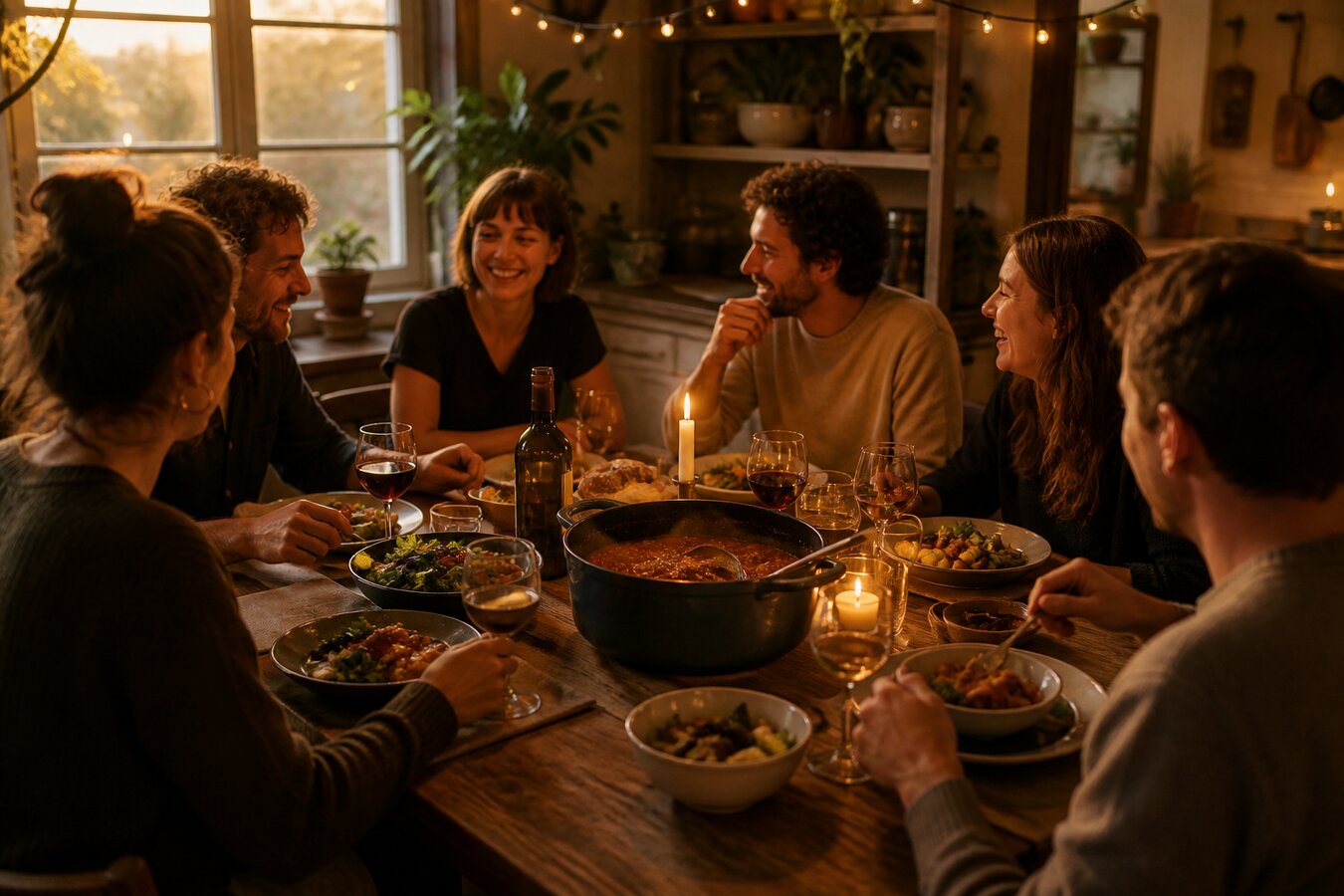
Once guests arrive, dishes waiting in the sink can wait — the point of a hosting night is the hosting, not a spotless kitchen mid-meal.
Variations for different budgets
Low-key
One anchor dish, one store-bought side, and a simple dessert — built for a weeknight or a small, casual gathering.
Standard
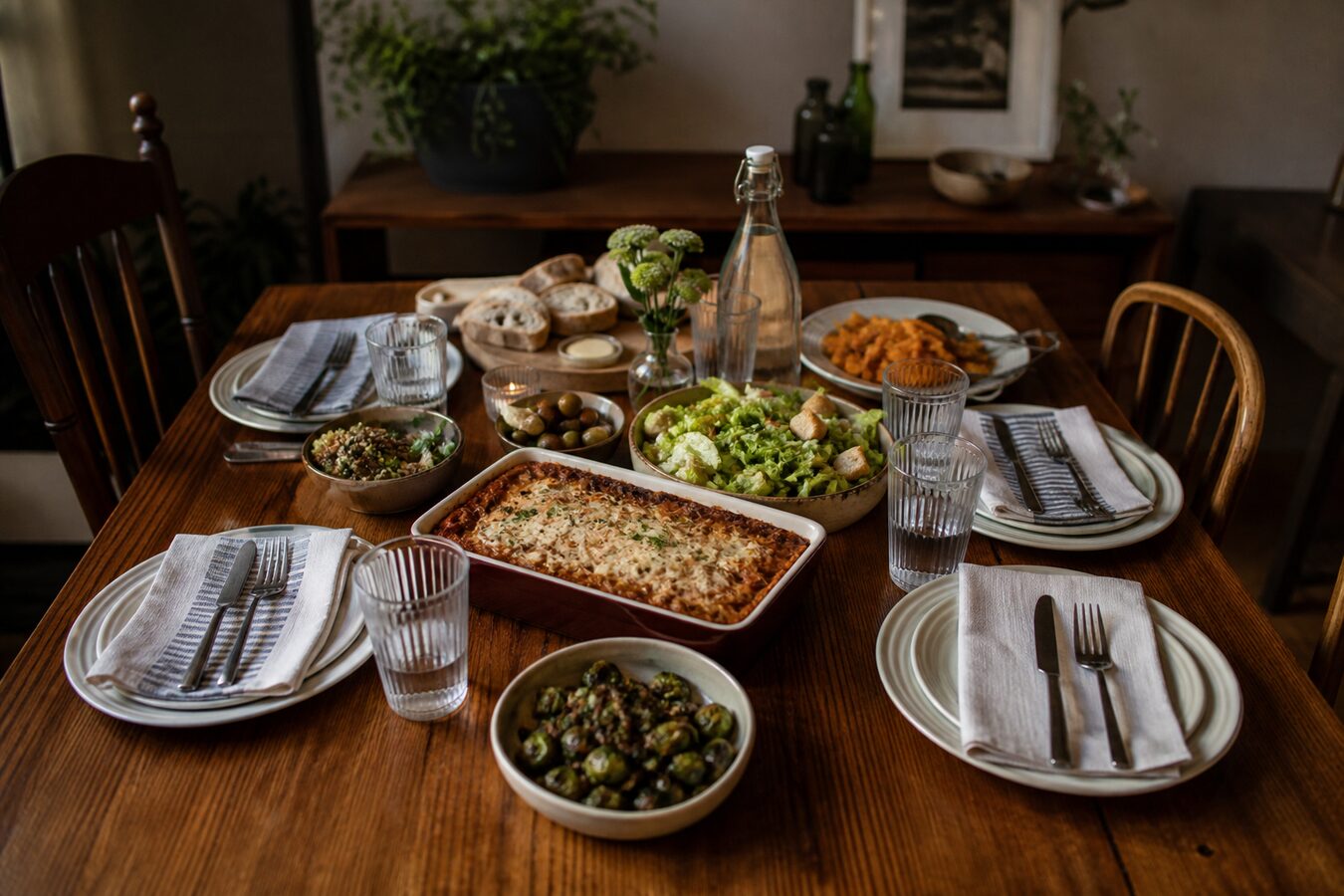
One anchor dish, two sides (one make-ahead), bread, and a dessert made the day before.
Full hosting night
Anchor dish, two sides, a starter, measured cocktails, and a dessert course with a real pause before serving it.
Practical considerations
Keep hot-held food above 140°F and cold-held food below 40°F, and don't leave perishable dishes out at room temperature for more than about 2 hours (1 hour if the room is warm) — see the sourced USDA guidance above for the full "danger zone" explanation.
Building a prep timeline backward
Instead of listing tasks in the order they occur to you, start from your target serving time and work backward, assigning each task a real time slot. This surfaces conflicts (two things both needing the oven at once) while there's still time to adjust.
| Time before serving | What happens |
|---|---|
| 2 days before | Shop for anything that keeps; confirm final guest count |
| 1 day before | Make anything that reheats well (braises, sauces, marinades, doughs) |
| 2-3 hours before | Oven-dependent items, anything needing to rest |
| 30-45 minutes before | Final plating, reheating, setting the table |
| At serving time | Everything hits the table within about 10-15 minutes of each other |
The one-pot rule
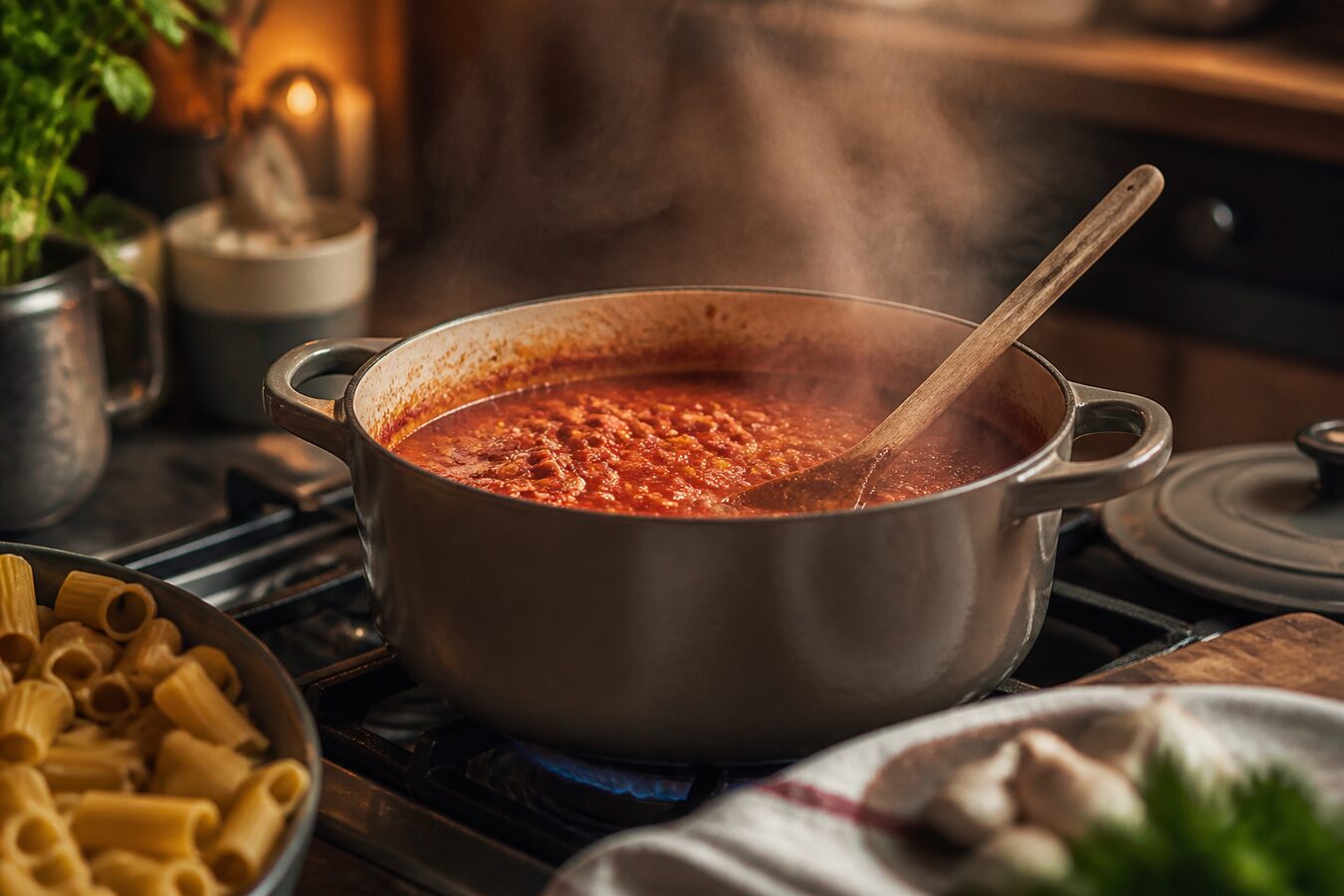
A hosting night doesn't need multiple dishes finishing at the exact same moment. Anchor the menu around one dish that holds well off heat for 15-30 minutes (a braise, a roast that needs to rest anyway, a pot of sauce) and build the rest of the menu — cold or room-temperature sides, a pre-made dessert — around that buffer. This single decision removes most of the last-15-minutes chaos that makes hosting feel stressful.
Estimating drink quantities
A rough planning rule for a 2-3 hour dinner: about half a bottle of wine per adult guest who drinks wine, or 2-3 beers per guest for a casual gathering. Always include a real non-alcoholic option (not just water) — sparkling water with citrus or a non-alcoholic mixed drink covers guests who aren't drinking without singling them out.
| Format | Rough quantity per adult guest |
|---|---|
| Wine with dinner | ~ half a bottle over 2-3 hours |
| Beer, casual gathering | 2-3 bottles/cans |
| Measured cocktails (see Cocktail Lab Night) | 2 measured drinks, spaced with food and water |
Serving order that keeps you at the table
- Put out anything room-temperature (bread, a cold starter, a salad) before you sit down, so the first few minutes don't require you to get back up
- Serve the anchor dish once, family-style if possible, rather than plating individually mid-conversation
- Hold dessert and coffee for a real pause rather than rushing straight into it — the gap itself is part of a relaxed hosting night
Cleanup strategy
Clean as you cook for anything that would otherwise pile up (mixing bowls, cutting boards) but let plates and glasses wait until after guests leave — stopping to load the dishwasher mid-conversation defeats the purpose of hosting. A 10-minute reset right after guests leave (scrape plates, start the dishwasher, wipe counters) prevents the discouraging 'wake up to a wrecked kitchen' outcome without requiring cleanup during the actual event.
Common mistakes
- Adding a new, untested recipe for the first time on the night you're hosting, rather than a dish you've already made successfully at least once
- Underestimating how long oven-dependent dishes actually take when the oven is also being used for something else
- Serving all courses individually plated for a group of 6+, which multiplies both cooking and cleanup time
- Forgetting a real non-alcoholic option, leaving non-drinking guests with only water
Sources & further reading
Printable checklist
The Hosting Night Planning Guide: Menu, Timing, and Cleanup