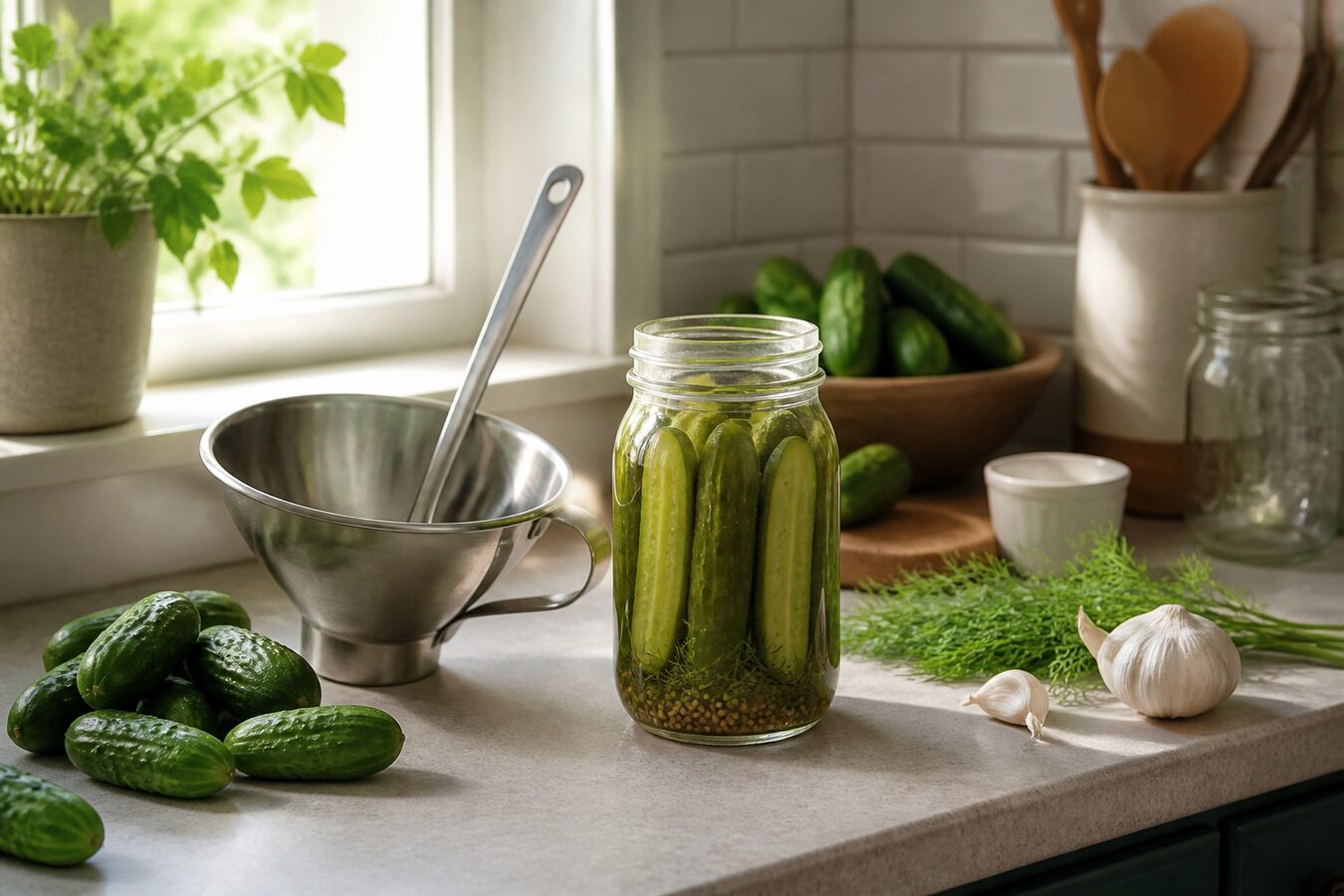
Introduction
One jar is a realistic amount of preserving to try without needing a full canning setup. A quick refrigerator pickle or small-batch jam uses a single 16-ounce jar, keeps in the fridge instead of requiring a hot water bath, and is finished in about an hour.
The goal isn't shelf-stable, pantry-ready preserving — it's a single jar you'll actually eat within a few weeks, made with whatever produce looks good that day.
At a glance
- Who it’s for
- People who want one refrigerated jar of quick pickles or jam to feel considered but not overproduced.
- Expected cost
- $6-$22; seasonal produce, spices, and a quality jar drive cost
- Time needed
- Prep 20 minutes; active time 30-45 minutes; total 1-2 hours plus chilling
Supplies & preparation
- clean 16-ounce jar
- fresh produce
- vinegar
- water
- kosher salt
- sugar optional
- measuring cup
- small saucepan
- funnel
- labels
- marker
- cutting board
- knife
- refrigerator space
Step-by-step
-
Pick one produce item and one method
Choose either a quick pickle (cucumbers, carrots, red onion) or a small jam (any soft fruit — berries, stone fruit, even overripe bananas). Trying to do both in one session usually means neither turns out well.
-
Sterilize the jar with boiling water, not the dishwasher
Pour boiling water into the clean jar and let it sit for a minute, then pour it out just before filling. This is a fast substitute for full canning sterilization and is enough for a refrigerator preserve.
-
For pickles: heat the brine, don't boil the vegetables
Combine vinegar, water, salt, and any sugar in a small saucepan and bring just to a simmer, then pour the hot brine directly over the raw, cut vegetables in the jar. Boiling the vegetables themselves makes them mushy.
-
For jam: cook fruit down with sugar until it coats a spoon
Simmer chopped fruit with sugar over medium heat, stirring occasionally, until it thickens enough to sit on the back of a cold spoon without running. This usually takes 20–30 minutes depending on the fruit's water content.
-
Cool before sealing and labeling
Let the jar cool to room temperature with the lid loosely set before sealing tightly — sealing while hot can create pressure that pushes the lid off later. Label with the contents and today's date.
-
Refrigerate and give it time before tasting
Quick pickles need at least 24 hours in the fridge for the flavor to develop; jam is ready once fully cooled but improves after a day. Resist tasting immediately and judging the final flavor too early.
-
Use it within the safe window
Refrigerator pickles are good for about a month; quick jam without added pectin or full sugar ratios should be used within two to three weeks. Write the use-by date on the label so you're not guessing later.
Common mistakes
- Boiling vegetables before pickling instead of pouring hot brine over raw ones, which results in mushy pickles.
- Sealing the jar while it's still hot, which can build pressure and push the lid off as it cools.
- Tasting jam or pickles immediately instead of letting them sit — the flavor is noticeably different after 24 hours.
- Skipping the date label, which makes it easy to forget how long something has been in the fridge.
- Treating a refrigerator pickle or quick jam as shelf-stable when it needs to stay refrigerated and used within a few weeks.
Variations for different budgets
Budget
Use whatever single vegetable or overripe fruit is already in your fridge — quick pickles and jam are both forgiving of imperfect produce.
Mid-range
Add a specific spice blend (mustard seed and dill for pickles, vanilla or citrus zest for jam) to make the single jar feel distinct rather than generic.
Splurge
Use a specialty vinegar (champagne or sherry vinegar) for pickles, or a single premium fruit (fresh figs, a specific stone fruit at peak season) for jam, and use a nicer jar meant for gifting.
Practical considerations
Follow a tested canning recipe's exact ratios of acid, sugar, and salt, use a properly sized jar and new lid, and process for the full recommended time — do not shortcut sterilization when preserving food for later eating.
Food safety basics for a one-jar batch
What makes a preserved jar safe to eat later is mostly about acidity, not how it looks or tastes. High-acid foods (most fruit jams, vinegar pickles) can be safely processed in a boiling-water bath. Low-acid foods (most vegetables on their own, meats) need a pressure canner to reach a high enough temperature to destroy botulism-causing spores — a water bath alone is not hot enough for those.
This is why a tested recipe's exact ratio of vinegar, sugar, or salt matters for safety, not just flavor. Cutting the vinegar in a pickle recipe or swapping in a lower-acid vinegar changes the acidity the recipe was designed around, even if the jar still tastes fine to you.
Signs a jar has gone wrong
- A lid that's bulging, loose, or already popped when you go to open it
- Cloudy liquid in a jar that should be clear, or liquid that has leaked out around the seal
- Mold of any color on the surface, even a small spot — discard the whole jar, don't just scoop it out
- A spurting sound or off, sour, or sulfurous smell when you open the lid
- Any jar that never fully sealed (the lid flexes when pressed) should be refrigerated and used within about a week, not stored on a shelf
Sources & further reading
Printable checklist
Preserve One Jar Day