Introduction
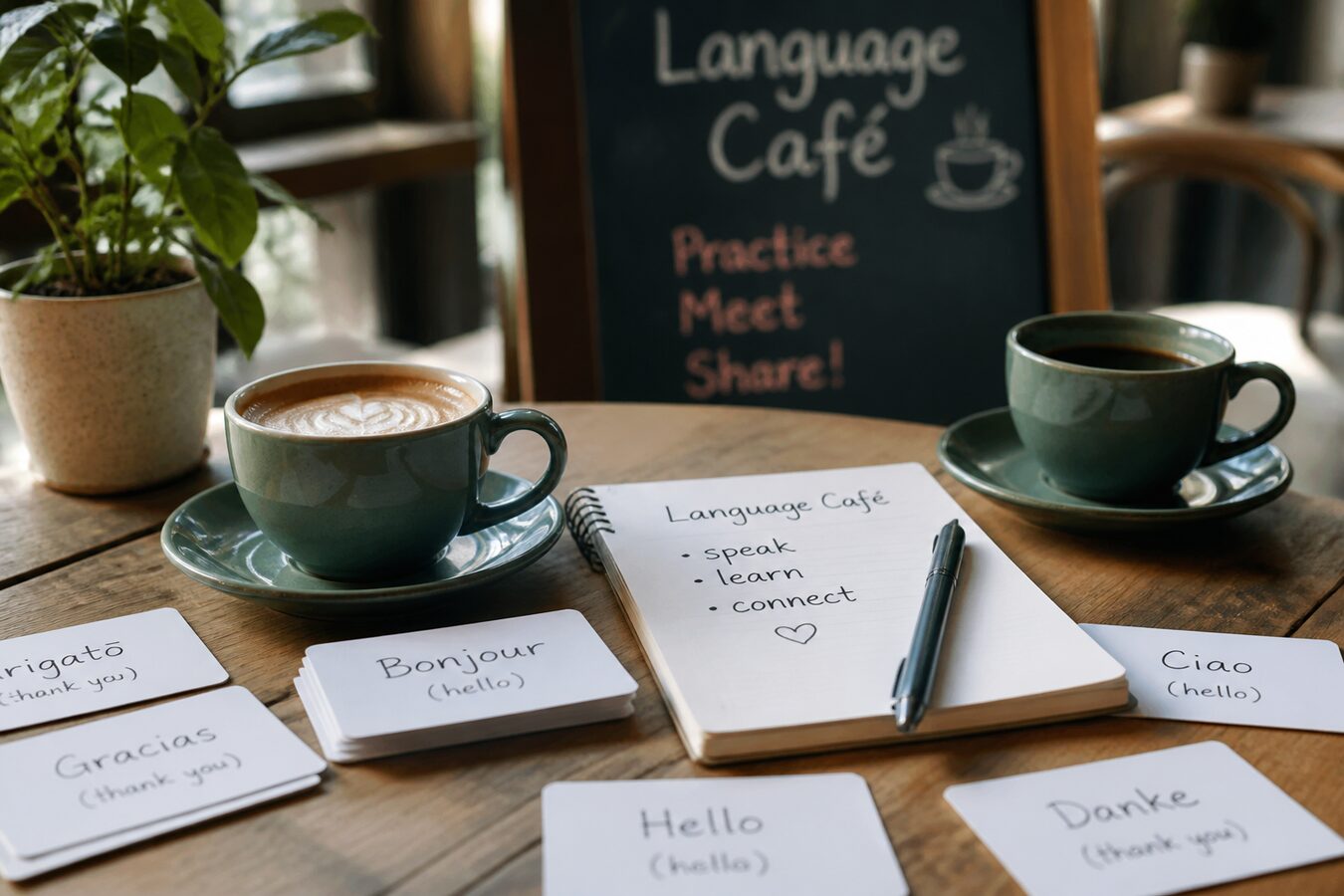
Language exchange cafes and conversation meetups exist in most mid-size and large cities, usually free or low-cost, and they're built specifically for people who barely know the language they're practicing. Showing up with ten memorized phrases is enough to participate.
The format is low-pressure by design: small groups, a rotating set of conversation partners, and an explicit understanding that everyone there is still learning.
At a glance
- Who it’s for
- People who want one beginner-friendly language conversation cafe to feel considered but not overproduced.
- Expected cost
- $5-$30; cafe purchase, transit, and optional meetup fee drive cost
- Time needed
- Prep 20 minutes; active time 90 minutes; total 2-3 hours
Supplies & preparation
- event confirmation
- notebook
- pen
- phrase list
- payment card
- water
- phone charger
- headphones
- small bag
- public-transit details
- name tag if requested
- cash for cafe
Step-by-step
-
Find a meetup or cafe with a beginner-friendly format
Search meetup platforms or local language schools for conversation tables specifically marked beginner-friendly — some groups skew toward fluent speakers practicing casually, which can feel intimidating for a true beginner.
-
Learn ten essential phrases beforehand
Memorize basic phrases: greetings, 'I'm a beginner,' 'can you repeat that,' 'how do you say...,' and a few topics you can talk about (your job, a hobby, where you're from). This removes the blank-mind moment when a conversation starts.
-
Confirm the event's actual format before arriving
Some conversation cafes rotate partners every 10–15 minutes; others are open seating. Check the event description or ask the organizer beforehand so you know what to expect walking in.
-
Arrive a few minutes early, not exactly on time
Arriving slightly early gives you a moment to get a drink and settle in before groups form, rather than walking into a room of people already paired off.
-
Say you're a beginner, out loud, at the start
Telling your conversation partner you're a beginner at the start sets expectations and usually makes people slow down and simplify their language to meet you there — most language exchange participants expect and welcome this.
-
Keep a small notebook for new words
Jot down words or phrases that come up in conversation that you don't know yet. This turns each conversation into material you can review afterward instead of words that disappear the moment the conversation moves on.
-
Say yes to a repeat visit before you leave
If the format worked for you, commit to the next date before you leave — momentum from a single good session is easy to lose if you wait too long to return.
Common mistakes
- Choosing an advanced-level meetup by mistake, which can feel discouraging for someone who barely knows the language.
- Not memorizing any phrases beforehand and freezing when a conversation starts.
- Staying silent about being a beginner, which can lead to a partner speaking too fast or assuming more knowledge than you have.
- Skipping the notebook and losing new vocabulary that came up in conversation as soon as you leave.
- Treating one visit as a full test of whether the format 'works,' instead of giving it two or three tries.
Variations for different budgets
Budget
Look for free meetup-based conversation groups at libraries, community centers, or informal cafe meetups with no cover charge.
Mid-range
Attend a paid language cafe or school-hosted conversation event with a small fee, which sometimes includes more structured practice.
Splurge
Combine the conversation cafe with a one-on-one tutoring session booked for the same week, using the cafe for casual practice and the tutor for structured correction.
Practical considerations
Meet in a public space for a first-time language exchange, and avoid sharing home address or financial details with someone you've just met.
Printable checklist
Language Cafe Afternoon