Introduction
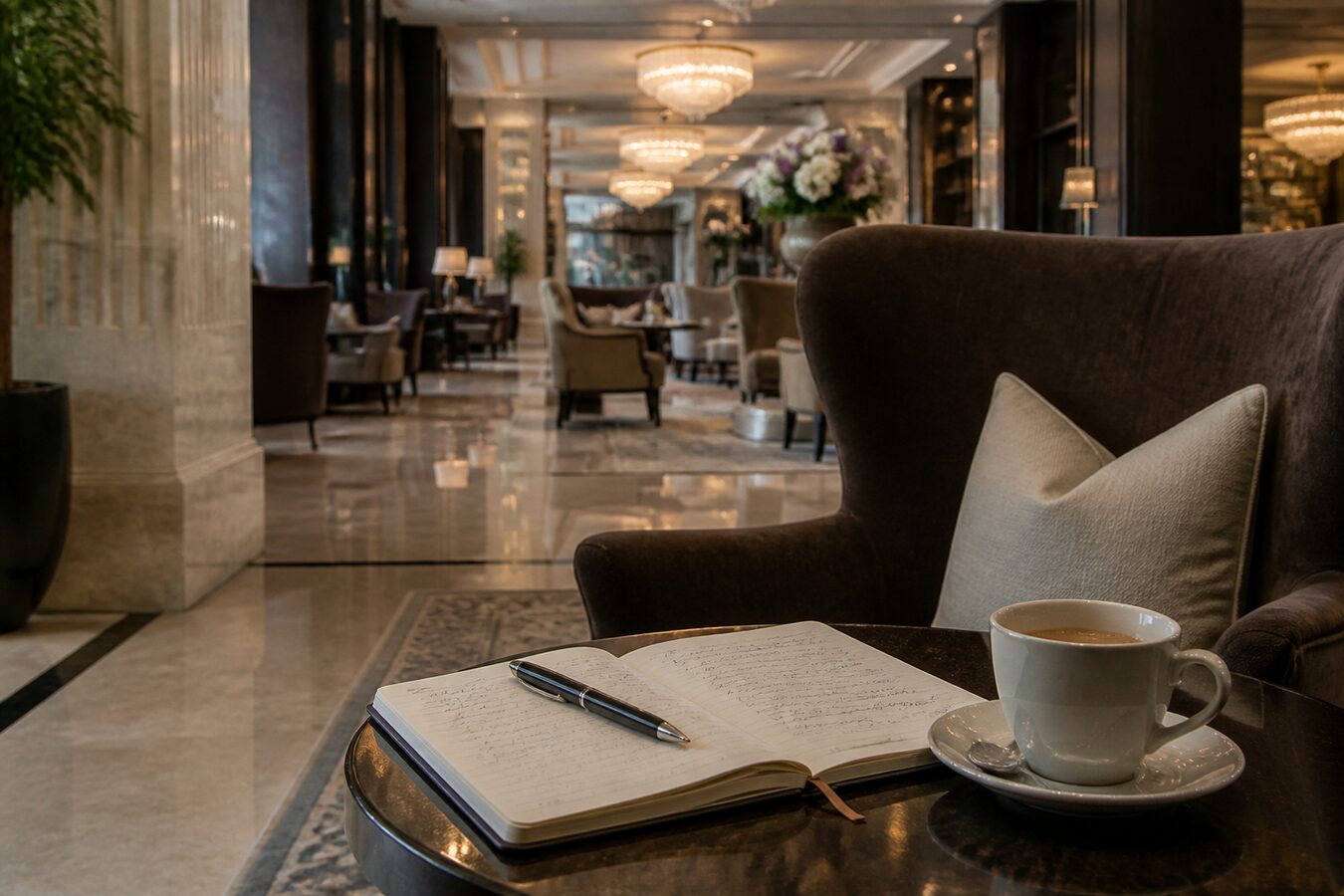
A well-designed hotel lobby is a free change of scenery: comfortable seating, ambient noise, and none of the obligations of your usual workspace. An hour there with a notebook or laptop can shift your focus the way a change of location often does, without booking a room.
The key is picking a hotel where sitting with a drink and working is clearly welcome — larger hotels with lobby bars or cafes are built for exactly this, while smaller boutique properties may expect guests only.
At a glance
- Who it’s for
- People who want one respectful writing hour in a hotel lobby to feel considered but not overproduced.
- Expected cost
- $8-$35; one drink, snack, parking, and tip drive cost
- Time needed
- Prep 15 minutes; active time 60 minutes; total 1.5-2 hours
Supplies & preparation
- notebook or laptop
- pen
- charger
- headphones
- payment card
- small bag
- writing prompt
- water
- weather layer
- phone on silent
- hotel cafe hours
- tip money
Step-by-step
-
Choose a hotel with an actual lobby cafe or bar
Larger hotels — chain properties, convention hotels, hotels with a dedicated lobby lounge — are generally set up for non-guests to sit and order something. Check reviews or call ahead if you're unsure whether outside visitors are welcome.
-
Check the lobby cafe or bar's actual hours
Lobby bars sometimes open later than the hotel itself, and cafes may close mid-afternoon before reopening for evening service. Confirm hours so you're not arriving to a closed counter.
-
Order something within the first ten minutes
Buying a coffee, a drink, or a light snack shortly after sitting down is both polite and practical — it establishes you as a paying customer of the space rather than someone just occupying a seat.
-
Pick a seat that isn't in a high-traffic path
Choose seating away from the main check-in flow or elevator bank so you're not in anyone's way and can actually concentrate. Corner seating near a window is usually both quieter and more pleasant.
-
Keep headphones in, even without music playing
Headphones signal that you're focused and not looking to chat, which keeps interruptions low in a semi-public space. Playing nothing, or something low and instrumental, still works.
-
Set a specific writing goal, not just 'be productive'
A vague goal like 'get some writing done' rarely survives a novel environment. A specific one — finish this section, get through these prompts, write for 40 uninterrupted minutes — gives the hour more shape.
-
Tip and thank the staff before you leave
If you've been served by a bartender or barista, tip appropriately and thank them on the way out — being a good guest in someone else's space is what makes this a repeatable habit rather than a one-time thing.
Common mistakes
- Sitting down for an extended period without ordering anything, which can read as freeloading in a hotel's paid seating area.
- Choosing a boutique hotel where non-guest lobby access is unclear or discouraged, instead of a larger property built for it.
- Sitting in a high-traffic area near check-in or elevators, which makes focus difficult and can be in other guests' way.
- Showing up during a closed window for the lobby cafe or bar without checking hours first.
- Treating the hour as purely social when the goal was writing — the format works best with a specific task in mind.
Variations for different budgets
Budget
Order just a coffee or a non-alcoholic drink, and stick to a hotel with a casual lobby cafe rather than a full bar.
Mid-range
Order a light snack alongside a drink, and choose a hotel with a nicer lobby design worth sitting in for the atmosphere alone.
Splurge
Choose a hotel known for its lobby design or a rooftop or lounge area, and treat the outing as an early-evening drink and writing session rather than strictly daytime work.
Practical considerations
Ask staff whether non-guests are welcome in the lobby space before settling in for a long stretch, and keep bags and devices within sight at all times in a public space.
Printable checklist
Hotel Lobby Writing Hour