Introduction
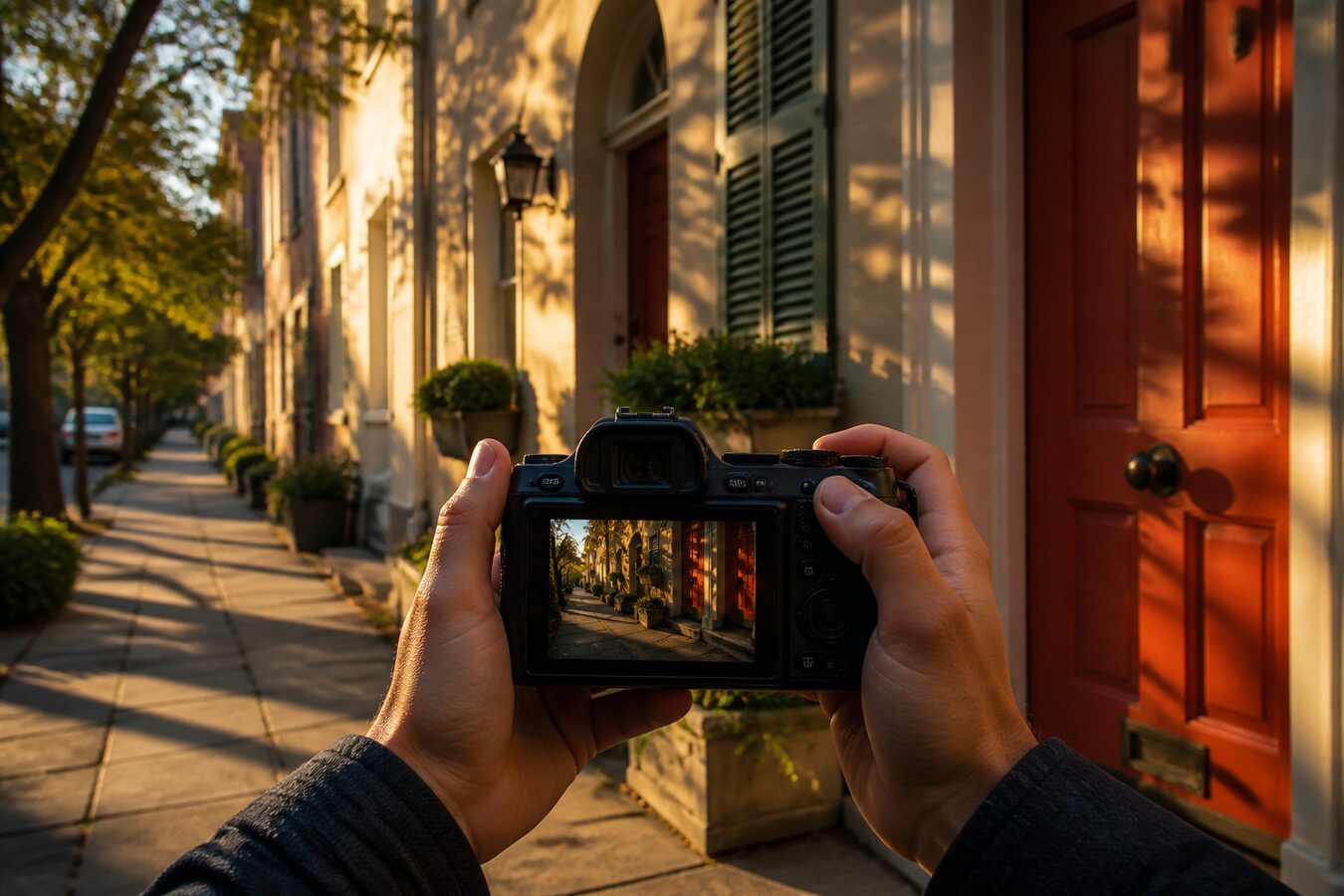
An hour spent photographing your own block sounds unremarkable, but three simple constraints make it work: pick one direction, set a hard time limit, and commit to a single visual theme (shadows, doorways, reflections, texture) for the whole walk.
The constraint is what forces you to look more closely at streets you normally walk past without noticing.
At a glance
- Who it’s for
- For anyone who wants a one-hour practice in seeing your own block.
- Expected cost
- $0 if using a phone; minimal if printing a few favorites afterward
- Time needed
- one hour plus ten minutes to edit
Supplies & preparation
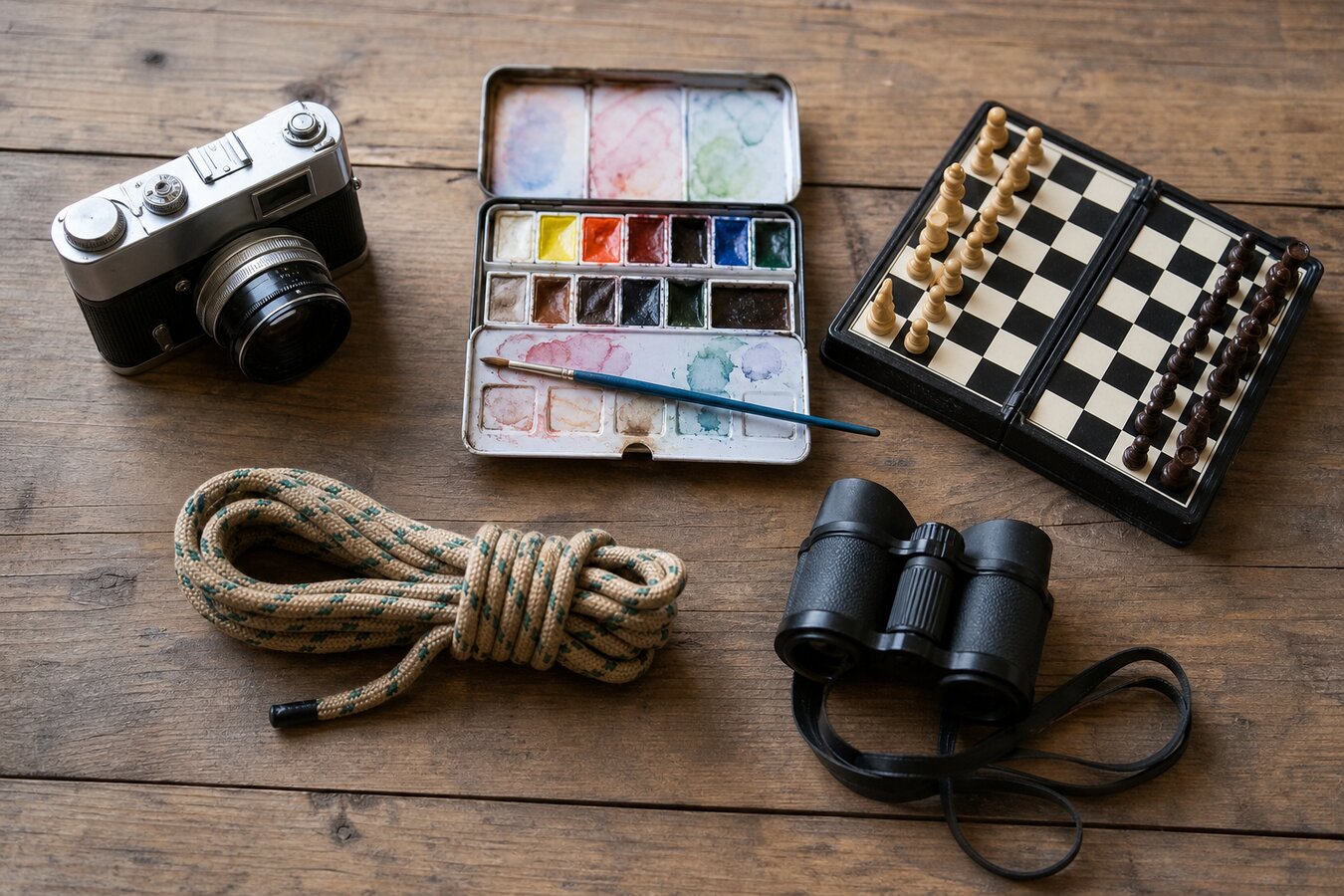
- phone or camera
- charged battery
- comfortable shoes
- weather layer
- small notebook
- pen
- water bottle
- timer
- lens cloth
- local map
- reflective accessory after dark
- small tote
Step-by-step
-
Pick one theme before you leave
Choose a single visual thread — shadows, doorways, signage, reflections, a specific color — and commit to shooting only that for the full hour. A theme narrows your attention in a way that 'just take some photos' never does.
-
Set a hard time limit and a walking radius
Give yourself exactly one hour and a radius of a few blocks from home. The limit is what keeps this from becoming an open-ended errand; you're not trying to cover new ground, just to look harder at familiar ground.
-
Walk slower than feels natural
Deliberately slow your pace below what feels normal — at commuting speed it's easy to miss the interesting details of your own street. A slower pace is the actual technique here, more than any camera setting.
-
Shoot the same subject from three angles
When something catches your eye, don't just take one photo — circle it, crouch, look up. Comparing the three afterward teaches you more about composition than any single 'good' shot.
-
Note one thing you'd never noticed before
By the walk's midpoint, you should be noticing something about your own neighborhood you hadn't consciously registered before — a specific door color, a repeated architectural detail. Write it down.
-
Review the photos the same day
Look through what you shot within a few hours, while the walk is still fresh, and delete anything that doesn't hold up. Waiting days to review usually means you forget why you took half the photos.
-
Repeat the same walk in a different season
The real value of this exercise comes from doing it more than once, ideally on the same streets in a different season or time of day, to see how much changes that you'd otherwise never notice.
Common mistakes
- Trying to cover too much ground instead of staying within a few blocks of home.
- Skipping the theme constraint and shooting everything, which usually produces a scattered, forgettable set of photos.
- Walking at a normal pace instead of deliberately slowing down, which is the actual mechanism that makes this work.
- Not reviewing photos the same day, losing the context of why a shot seemed worth taking.
- Doing it once and assuming you've 'done' the exercise instead of repeating it seasonally.
Variations for different budgets
Budget
Use your phone camera exclusively and skip any printing — review and keep favorites digitally.
Mid-range
Use a dedicated camera if you own one, and print two or three favorite shots at a local shop.
Splurge
Print a small photo book or a set of framed prints from a season's worth of neighborhood walks.
Practical considerations
Stay aware of traffic while looking through a viewfinder, respect posted no-photography signs, and ask before photographing strangers up close.
Printable checklist
The Neighborhood Photo Walk