Introduction
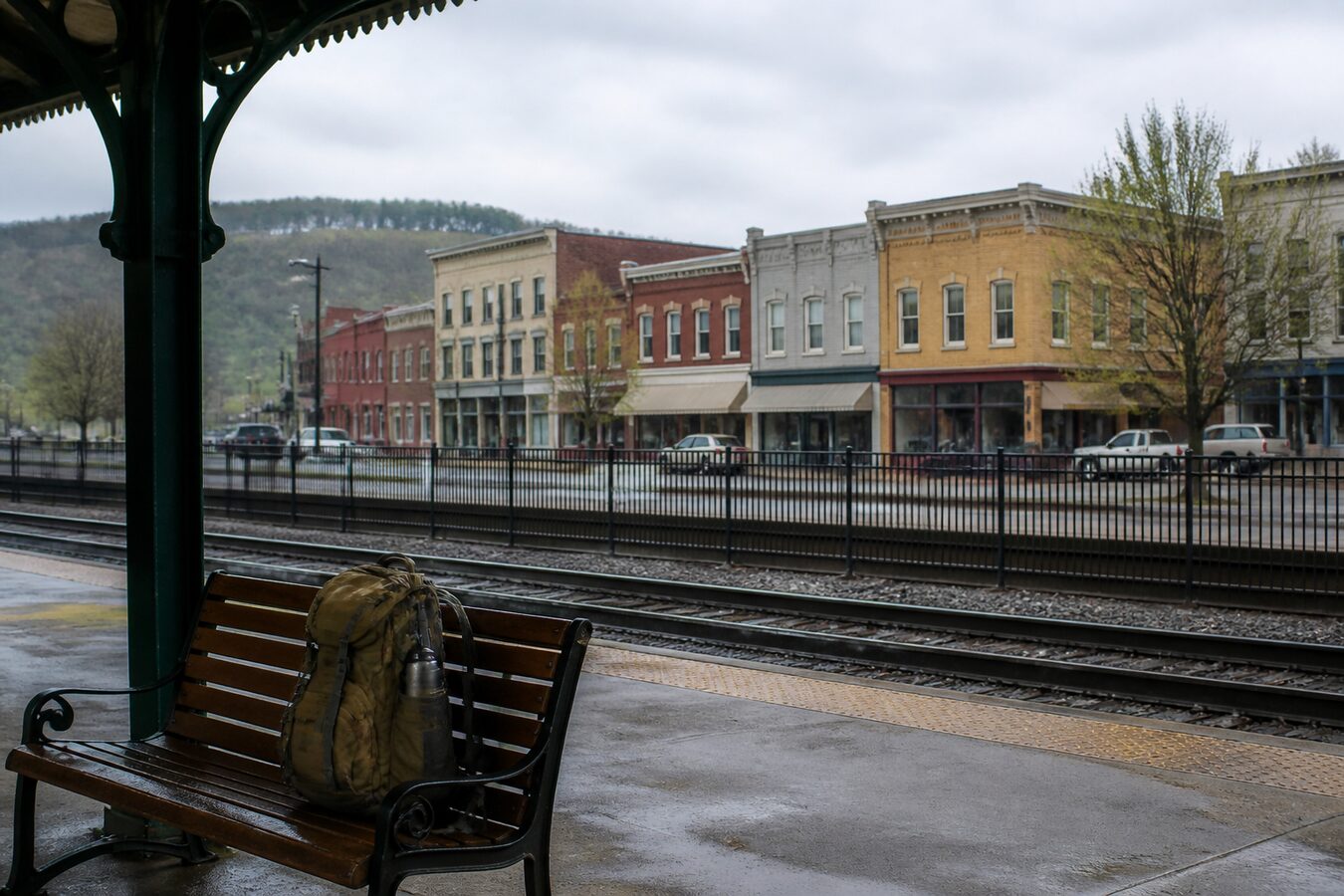
Regional trains go through a lot of towns that never make anyone's list, and that's the appeal. Pick a stop 45 minutes to 2 hours out with no particular reputation, and treat the destination as a place to walk around rather than a place with a must-see attraction.
The lack of a plan is the plan: check the train schedule both ways, then let the town itself decide what the day looks like once you're there.
At a glance
- Who it’s for
- People who want a regional train day trip to a modest town to feel considered but not overproduced.
- Expected cost
- $15-$110 per person; rail fare, lunch, and local transit drive cost
- Time needed
- Prep 30 minutes; active time 5-8 hours; total one day
Supplies & preparation
- round-trip ticket
- government ID
- offline map
- train timetable
- water
- snack
- weather layer
- comfortable shoes
- payment card
- phone charger
- notebook
- small tote
Step-by-step
-
Check the full round-trip schedule first
Regional trains often run less frequently outside rush hour, especially on the return leg. Confirm both the outbound and return times before committing to a stop, so you're not stranded for hours longer than intended.
-
Pick a stop based on distance, not reputation
Choose a town 45 minutes to 2 hours away that you've never had a reason to visit. Skip researching 'things to do' in advance — the appeal here is arriving without expectations rather than following a checklist.
-
Buy a round-trip ticket in advance if it's cheaper
Many regional rail lines offer a discount on round-trip versus two one-way tickets, and buying ahead can avoid a line at a small station with limited staff or machines.
-
Walk from the station in one direction with no destination
Pick a direction from the station and walk for 15–20 minutes without a specific goal. Small towns often reveal a main street, a park, or a cafe this way that isn't obvious from a map.
-
Eat lunch somewhere that looks locally run
Skip chain restaurants near the station in favor of anything that looks independently owned — a diner, a bakery, a family restaurant. This is usually the most memorable part of an otherwise unplanned day.
-
Build in a buffer before the return train
Arrive back at the station at least 15–20 minutes before the scheduled return, especially if the town has infrequent service — missing a return train on a regional line can mean a long wait for the next one.
-
Note the town's name and one detail for later
Write down the town and the one thing that stood out — a bakery, a park, a mural — so if you ever want to actually plan a return, you have a specific starting point instead of a vague memory.
Common mistakes
- Not checking the return schedule and discovering the last train back is hours later than expected.
- Choosing a well-known tourist town instead of a genuinely unremarkable one, which defeats the purpose of the format.
- Eating at a chain restaurant near the station instead of walking a few minutes further to find something local.
- Cutting the return buffer too close on a line with infrequent service.
- Overplanning the destination in advance, which removes the exact appeal of arriving with no expectations.
Variations for different budgets
Budget
Choose the closest possible stop to minimize fare, bring your own snacks, and treat the walk itself as the main activity.
Mid-range
Choose a stop 1–2 hours out, budget for a proper sit-down lunch, and allow time for a local shop or two.
Splurge
Choose a scenic rail route where the ride itself is part of the appeal, and budget for a nicer restaurant meal at the destination.
Practical considerations
Confirm the return schedule before boarding so you're not stranded, keep your ticket and ID accessible, and mind the gap and platform edges at each stop.
Printable checklist
Train to a Nowhere-Special Town