Introduction
Breakfast for dinner works as a reset precisely because it lowers the bar. Eggs, toast, and something sweet take twenty minutes and almost no decision-making, which is the whole point on a night when a full dinner plan feels like too much.
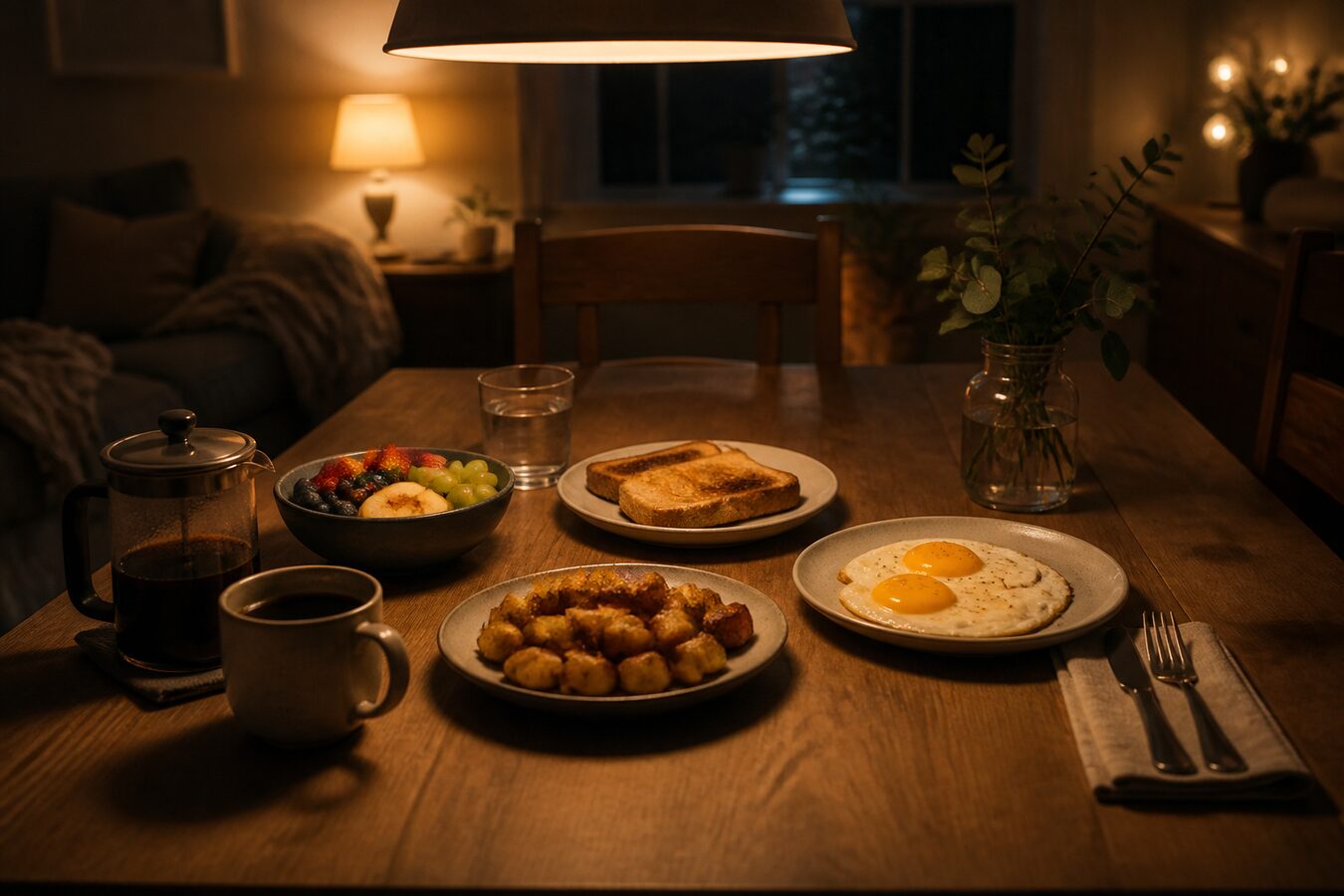
The trick to making it feel intentional rather than lazy is treating it like an actual meal: real plates, one thing that feels a little special (good bread, real maple syrup, a soft-boiled egg instead of scrambled), and eating at the table instead of standing at the counter.
At a glance
- Who it’s for
- People who want a simple breakfast dinner to feel considered but not overproduced.
- Expected cost
- $8-$32 for 1-4 people; smoked fish, berries, or prepared pastries drive cost
- Time needed
- Prep 10 minutes; active cooking 20-30 minutes; total 35-45 minutes
Supplies & preparation
- eggs
- bread
- butter or olive oil
- fruit
- potatoes or oats
- milk or yogurt
- salt
- pepper
- hot sauce
- skillet
- spatula
- real plates
- napkins
Step-by-step
-
Decide on one savory and one sweet element
Pick one savory anchor (eggs, hash, or a breakfast sandwich) and one sweet side (fruit, toast with jam, or a small stack of pancakes) so the plate feels complete without requiring a full menu of dishes.
-
Start the slower item first
If you're making potatoes or oats, start those first since they take longer than eggs. Get anything that needs real cook time going before you touch the eggs so nothing sits waiting.
-
Cook eggs last, over medium-low heat
Whatever style you prefer, cook eggs over medium-low heat rather than high — high heat makes scrambled eggs rubbery and fried eggs tough at the edges. Pull them just before they look fully done; they'll finish cooking off the heat.
-
Toast bread while the eggs rest
Toast bread in the last few minutes so it's warm but the eggs aren't overcooked waiting for it. Butter it while it's hot so the butter actually melts in rather than sitting on top.
-
Plate it like a real meal
Use actual plates instead of eating from the pan, and put the sweet and savory elements on the same plate rather than serving courses. This small step is most of what makes it feel like a deliberate meal instead of a fallback.
-
Sit down to eat it
Eat at the table rather than standing at the counter or on the couch. This is a small thing, but it's usually the difference between a night that feels like a treat and one that feels like you skipped dinner.
-
Clean the pan while it's still warm
Wipe out the egg pan while it's still warm rather than letting it sit — egg residue hardens fast and is much easier to clean immediately than after it cools.
Common mistakes
- Cooking eggs on high heat, which makes scrambled eggs rubbery and fried eggs tough around the edges.
- Skipping real plates and eating straight from the pan, which undercuts the 'treat' feeling the meal is going for.
- Not starting the slowest item (potatoes, oats) first, leading to eggs going cold while something else finishes.
- Buttering toast after it cools instead of right out of the toaster, when the butter can actually melt into it.
- Letting the egg pan sit dirty — dried egg is far harder to clean than a pan wiped out while still warm.
Variations for different budgets
Budget
Scrambled eggs, toast with butter, and whatever fruit is on hand — a complete plate for under two dollars a person.
Mid-range
Add smoked salmon or good bacon alongside eggs, and a small stack of pancakes or French toast as the sweet side.
Splurge
Soft-boiled or poached eggs, a proper hollandaise or good hot sauce, thick-cut brioche toast, and fresh berries with real maple syrup.
Practical considerations
Cook eggs and any breakfast meats to a safe internal temperature, and keep the griddle or stovetop clear of towels and packaging while it's hot.
Printable checklist
Breakfast-for-Dinner Reset