Introduction
One overnight outdoors resets more than a week of evenings on the couch, and it needs far less planning than a multi-day trip. Pick a campsite within an hour or two of home, reserve it if required, and pack only what one night actually calls for.
The goal is simplicity: minimal gear, an early enough arrival to set up in daylight, and no ambition beyond one good fire, one meal, and one night under a different sky.
At a glance
- Who it’s for
- People who want one legal overnight at a nearby campsite to feel considered but not overproduced.
- Expected cost
- $35-$250; campsite, borrowed versus owned gear, fuel, and food drive cost
- Time needed
- Prep 60-90 minutes; active time overnight; total 20-28 hours
Supplies & preparation
- tent
- sleeping bag
- sleeping pad
- headlamp
- weather layer
- water
- stove or permitted meal
- lighter
- camp mug
- first-aid kit
- map
- reservation
- trash bags
- power bank
Step-by-step
-
Reserve a site or confirm first-come rules
Many campgrounds require reservations, especially on weekends in season, while others are first-come, first-served. Check the specific site's policy and book or plan your arrival time accordingly.
-
Check the weather forecast the day before, not a week before
Weather forecasts for a specific location become meaningfully more accurate within 24–48 hours. Recheck the night before and adjust gear (rain layer, extra insulation) based on the current forecast, not an older one.
-
Pack gear by category, not by memory
Work through categories in order — shelter (tent, stakes), sleep (bag, pad), light (headlamp, backup batteries), food (stove or cooler meal, water), and safety (first-aid kit, map) — rather than trying to recall everything at once.
-
Arrive with at least two hours of daylight left
Set up camp before dark whenever possible — pitching a tent and organizing a site by headlamp takes longer and is more frustrating than doing it in daylight. Budget arrival time accordingly.
-
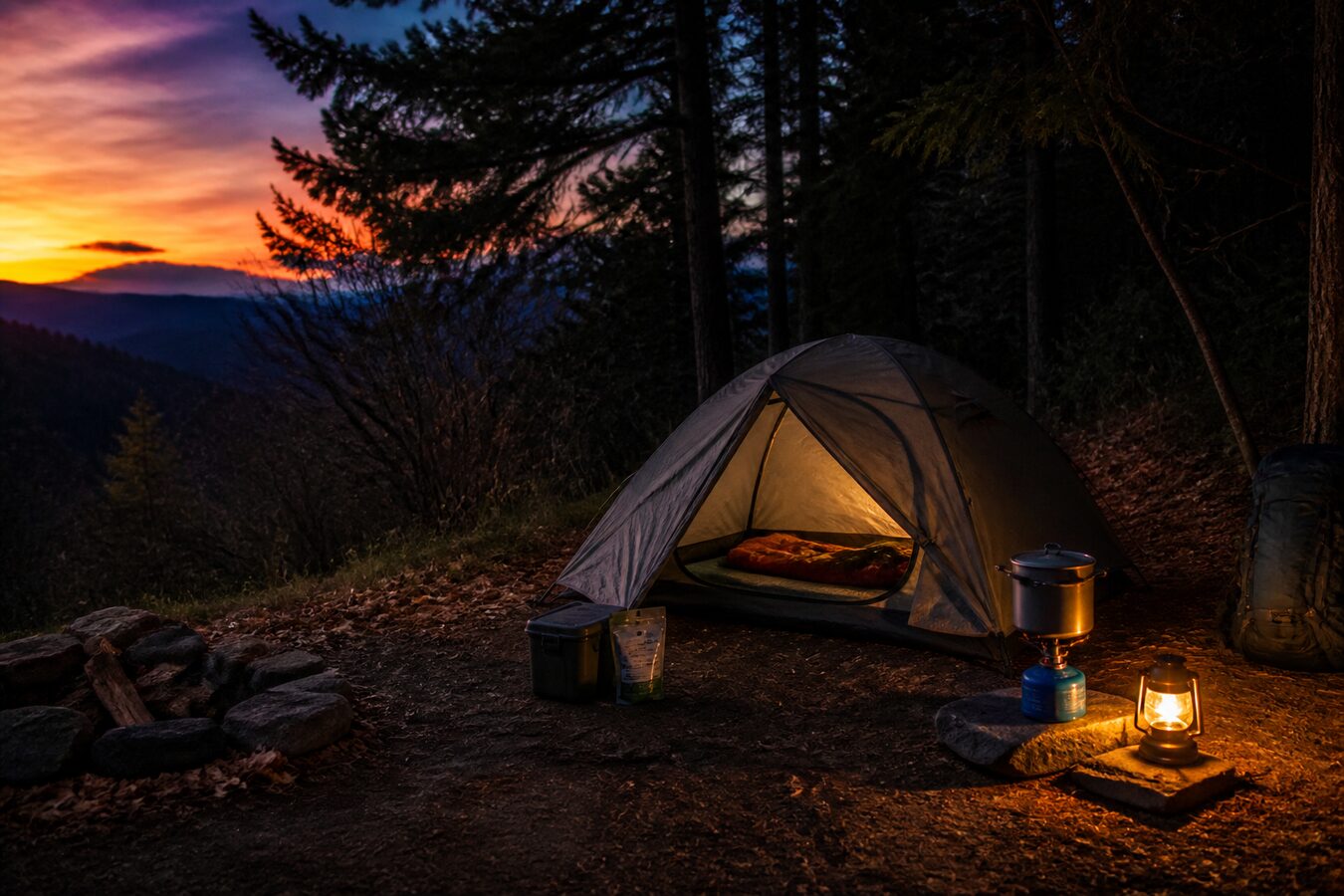
Set up the tent on cleared, level ground
Clear small rocks and sticks from under the tent footprint before pitching, and choose the flattest available spot. A poorly chosen tent site is one of the most frequent reasons for an uncomfortable night's sleep.
-
Keep the fire small and fully extinguish it before sleeping
A small, well-tended fire is easier to manage and safer than a large one. Extinguish it completely — stir ashes with water until they're cool to the touch — before going to sleep or leaving the site unattended.
-
Pack out everything, including food scraps
Leave the site as you found it: pack out all trash and food scraps, and check the ground around your tent site and fire ring before leaving the next morning. Many sites are lost to overuse by campers who don't follow this.
Common mistakes
- Checking the weather a week out and not rechecking closer to the trip, when the forecast is more reliable.
- Arriving close to dark and setting up camp by headlamp, which is slower and more frustrating than it needs to be.
- Not fully extinguishing the fire before sleeping — a fire that looks out can still have hot embers underneath.
- Overpacking gear 'just in case' for a single night, which makes the trip feel like more of a project than it needs to be.
- Skipping a reservation check and arriving to a full first-come, first-served site with no backup plan.
Variations for different budgets
Budget
Borrow gear from a friend or use a basic budget tent and sleeping bag, choose a no-fee or low-fee dispersed site if legally available nearby, and cook a simple one-pot meal.
Mid-range
Use owned mid-range gear, book a standard campground site with a fire ring and nearby water access, and cook a slightly more involved camp meal.
Splurge
Upgrade to a more comfortable sleeping pad and a larger tent, book a site with a view or added privacy, and bring a cooler with a real cooked meal instead of freeze-dried food.
Practical considerations
Check the campsite's fire restrictions and weather forecast before leaving, tell someone your exact location, and pack layers appropriate for overnight temperature drops.
Fire safety and leaving the site as you found it
Check the campground or land manager's current fire restrictions before you leave home — many areas issue seasonal burn bans that a quick search or phone call will confirm. If fires are allowed, use an existing fire ring rather than building a new one, keep the fire small enough to manage, and never leave it unattended.
Fully extinguish a fire by stirring in water or dirt until it's cool enough to touch with a bare hand — a fire that's merely not visibly flaming can still reignite overnight.
- Pack out all trash, including food scraps — do not bury or burn it
- Keep noise and light low after dark out of consideration for other campers
- Check the weather for overnight lows, not just the daytime forecast, before choosing gear
Sources & further reading
Printable checklist
One-Night Seasonal Camp