Introduction
Most rooms rely on a single overhead light, which is flat and unflattering for almost every activity except cleaning. A proper light audit adds layers — task lighting for reading or work, ambient lighting for evenings, and accent lighting for mood — using lamps you may already own.
This changes a room's feel faster and cheaper than new furniture or paint, and it takes one focused afternoon.
At a glance
- Who it’s for
- For anyone who wants layers of light that make ordinary evenings easier.
- Expected cost
- $10-$60 for bulbs and possibly one new lamp; more if replacing fixtures
- Time needed
- 90 minutes plus a short shopping trip
Supplies & preparation
- notebook
- pen
- phone camera
- spare bulbs
- bulb package labels
- lamp shade duster
- microfiber cloth
- extension cord
- surge-protected power strip
- step stool
- measuring tape
- painter’s tape
Step-by-step
-
Turn off all lights and assess in daylight
Note the room's natural light sources and any dead zones that stay dark even during the day — those are your priority spots for added lighting.
-
Turn on only the overhead light and note the mood
Most overhead-only lighting is harsh and shadowless in a way that doesn't suit relaxing activities. This is usually the moment people realize why a room has felt sterile.
-
Identify what each zone in the room is used for
A reading chair needs direct task light; a seating area for conversation needs softer ambient light; a shelf or art piece benefits from accent light. Match the lighting type to each zone's actual use.
-
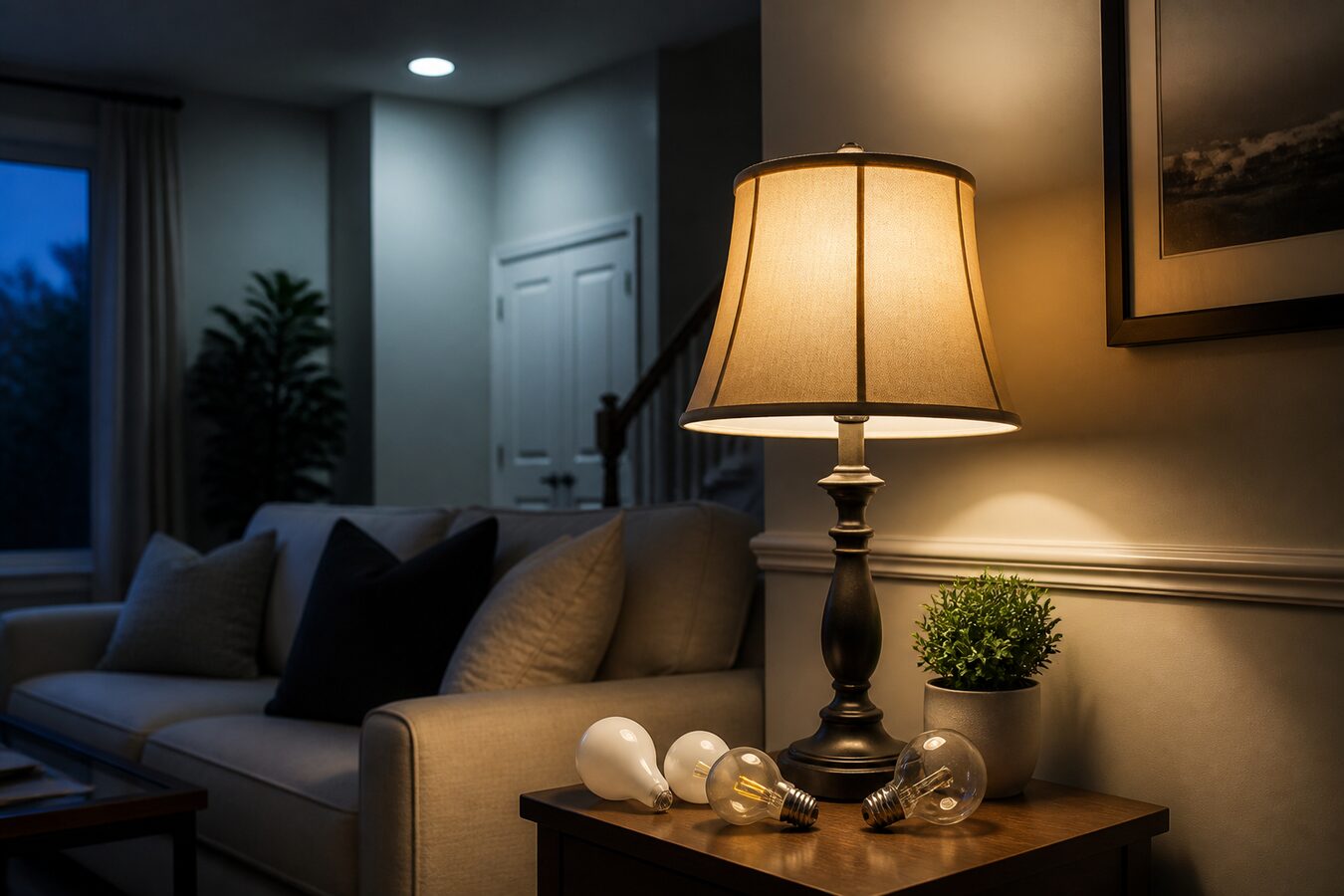
Check every bulb's color temperature
Warm white (2700–3000K) suits most living spaces; cooler white (4000K+) suits task areas like a home office. Mismatched temperatures across lamps in the same room is a common reason a space feels 'off' without an obvious cause.
-
Add at least one lamp below eye level
A floor or table lamp positioned lower than eye level, rather than only overhead light, softens shadows on faces and makes a room feel calmer in the evening.
-
Test the room at night with only the new setup
Turn off the overhead light entirely one evening and rely only on the lamps you've placed. This is the real test of whether the layered lighting works, not a daytime walkthrough.
-
Adjust one lamp's position based on the night test
Almost every first attempt needs one adjustment — a lamp moved a few feet, a shade swapped, a bulb changed. Make that one change rather than assuming the first setup is final.
Common mistakes
- Relying on the overhead fixture as the only test of whether a room's lighting works.
- Mixing warm and cool bulb temperatures across the same room without noticing the mismatch.
- Placing every lamp at the same height, which fails to soften shadows the way a lower lamp does.
- Buying new lamps before checking whether bulbs alone would fix the mood.
- Skipping the nighttime test and judging the setup only in daylight, when the difference is much less visible.
Variations for different budgets
Budget
Swap bulbs to a consistent warm color temperature across existing lamps — often the single biggest change for the smallest cost.
Mid-range
Add one new floor or table lamp to fill the room's darkest zone, plus consistent bulbs.
Splurge
Add a dimmer switch to the overhead fixture and two or three new lamps to create distinct zones for different times of day.
Practical considerations
Turn off power at the switch before changing any hardwired fixture, use a stable step stool rather than furniture, and match bulb wattage to what the fixture is rated for.
Matching the bulb to the fixture safely
Every fixture has a maximum wattage rating printed near the socket or on a label — exceeding it can overheat the fixture and is a recognized fire risk, especially in enclosed or older fixtures. LED bulbs make this easier since they draw far less wattage for the same brightness, but check the rating before assuming any bulb fits.
Brightness is measured in lumens, not watts, on modern packaging. As a rough guide, a 60-watt incandescent equivalent is about 800 lumens, and a 100-watt equivalent is about 1,600 lumens — useful for matching new LED bulbs to the brightness you're used to.
Sources & further reading
Printable checklist
Lamp and Light Audit