Introduction
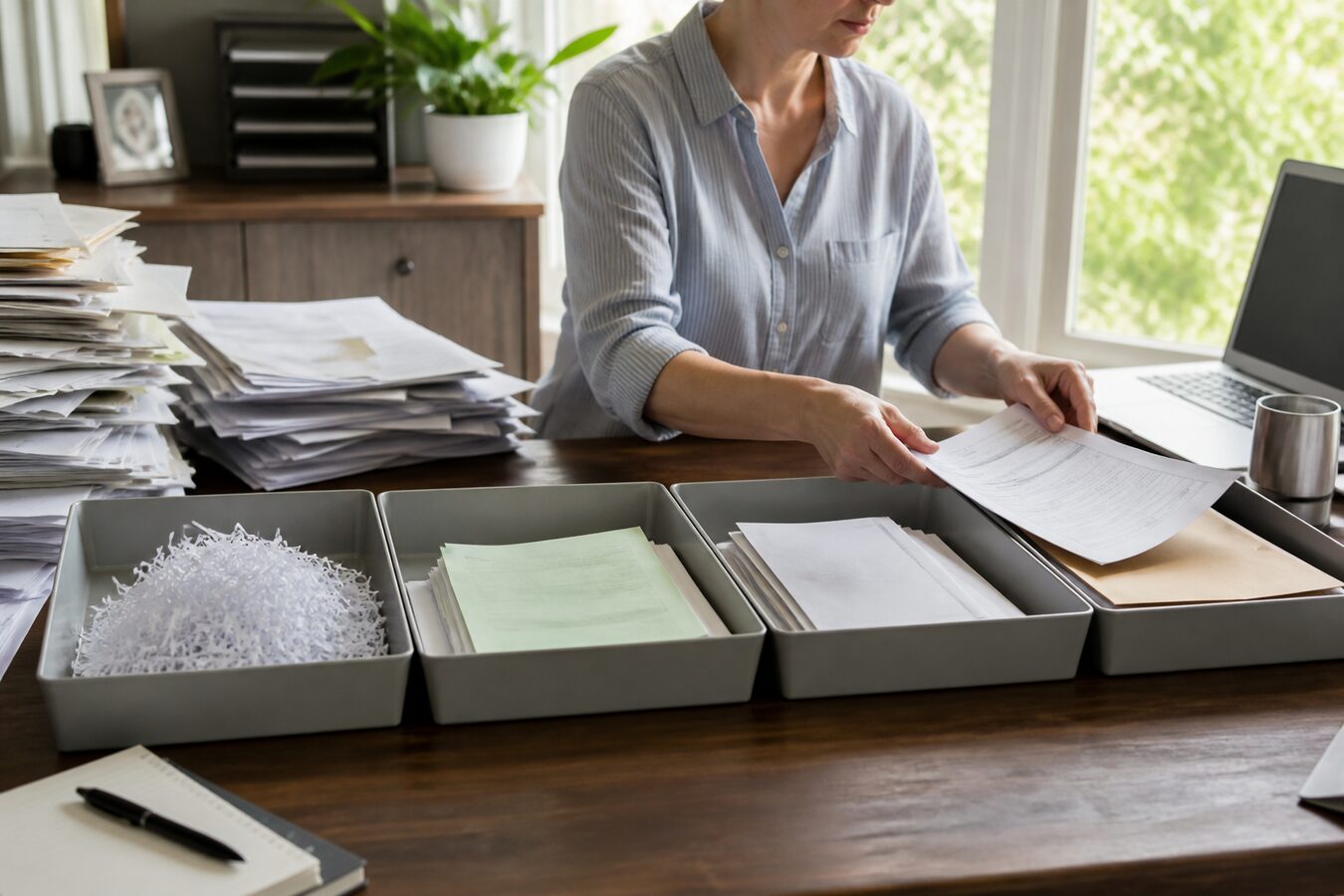
The paper pile on the counter grows because there's no actual system for it, just an accumulation point. Sorting it once into four clear folders — act now, file, shred, and reference — gives every future piece of mail a home instead of a new pile.
This is a one-session project: gather every loose paper in the house into one place, then process it in a single pass.
At a glance
- Who it’s for
- For anyone who wants one small control point for real paperwork.
- Expected cost
- $0-$30 for folders or a shredder if you don't already own one
- Time needed
- 90 minutes
Supplies & preparation
- banker box or tote
- four folders
- recycling bag
- cross-cut shredder
- staple remover
- paper clips
- sticky notes
- permanent marker
- scanner or phone scanner
- calendar
- pen
- timer
Step-by-step
-
Gather every loose paper into one spot
Walk through the house and collect all loose mail, receipts, manuals, and mystery papers into a single box or tote. Seeing it all together, rather than in scattered piles, is what makes sorting efficient.
-
Set up four labeled piles
Label sticky notes or folders: Act Now (bills, RSVPs, anything with a deadline), File (tax documents, warranties, records), Shred (anything with account numbers no longer needed), and Recycle (everything else).
-
Sort in a single fast pass, no deep reading
Go through each item quickly — glance for a deadline or account number, then place it in the appropriate pile without stopping to fully read most of it. Deep reading during sorting is what makes this task take all day instead of an hour.
-
Shred immediately, don't stack for later
Run the shred pile through the shredder right away rather than setting it aside — a 'shred later' pile has a way of becoming a permanent fixture.
-
Scan anything you might need digitally
For documents you want a backup of but don't need physically, use a phone scanning app before filing or shredding the original, especially for warranties and receipts for big purchases.
-
File the keep pile into a simple system
A banker's box with four broad folders (tax, home, medical, other) is enough for most households — you don't need an elaborate filing system, just one consistent place.
-
Handle the Act Now pile before you finish
Don't end the session with unpaid bills or unanswered RSVPs still in a pile — actually pay, respond, or schedule them before considering the sort complete.
Common mistakes
- Reading every document fully during the sort, which turns a one-hour task into an all-day one.
- Setting aside a 'shred later' pile instead of shredding immediately, which tends to become permanent.
- Filing everything into one folder instead of a few broad categories, making anything hard to find later.
- Finishing the sort without actually handling the Act Now pile, leaving bills or deadlines unresolved.
- Skipping a scan of important warranties or receipts before shredding or filing the paper original.
Variations for different budgets
Budget
Use a shoebox and paper folders you already have, and borrow or use a library shredder if you don't own one.
Mid-range
Buy a small cross-cut shredder and a labeled banker's box system for ongoing use.
Splurge
Add a scanner with a document feeder to digitize and store important papers going forward, reducing the pile at the source.
Practical considerations
Shred anything with account numbers, and if disposing of old electronics or batteries found in the pile, take them to a proper recycling point.
Printable checklist
Paper Pile Sunday