Introduction
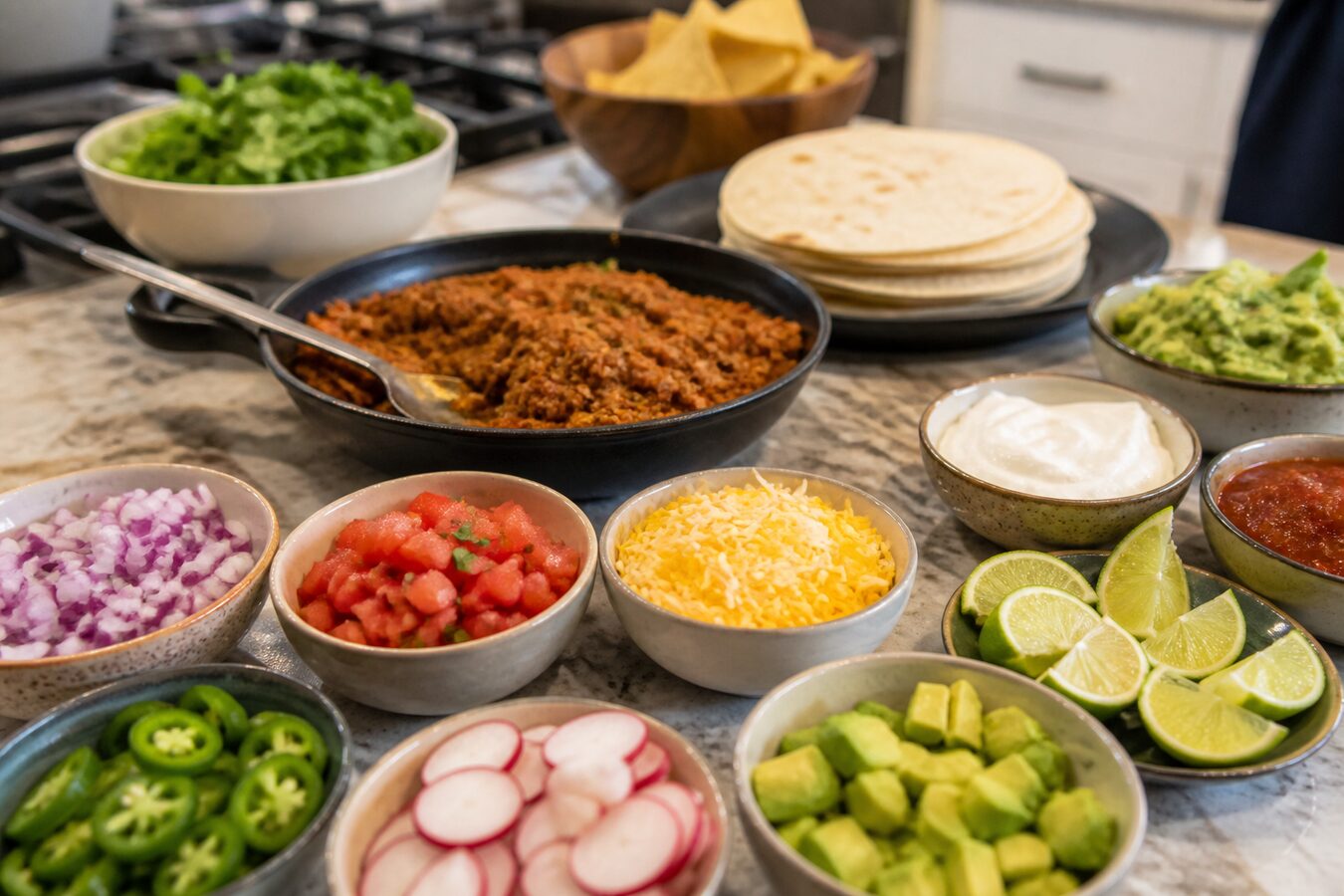
A taco bar works because the host does the cooking that actually requires attention — the protein — and lets guests assemble everything else. That single decision is what separates a relaxed taco night from a kitchen full of last-minute plating.
The setup matters more than the recipe: lay out toppings in the order tacos get built, keep hot items closest to the tortillas, and warm tortillas in batches so they don't all go cold at once.
At a glance
- Who it’s for
- People who want a build-your-own taco dinner to feel considered but not overproduced.
- Expected cost
- $45-$125 total; protein choice, prepared salsa, and drinks drive cost
- Time needed
- Prep 45-60 minutes; active cooking 30-45 minutes; total 2-2.5 hours
Supplies & preparation
- corn tortillas
- protein
- black beans
- onion
- cilantro
- limes
- mild salsa
- hot salsa
- shredded cheese
- avocado
- cabbage
- serving bowls
- sheet pan
- tongs
Step-by-step
-
Cook the protein ahead and hold it warm
Season and cook the protein up to an hour before guests arrive, then hold it in a low oven (around 200°F) or a slow cooker on warm. This is the one dish that benefits from being fully hands-off during the party.
-
Prep toppings in bowls, not on cutting boards
Dice onion and cilantro, slice limes, shred cheese and cabbage, and mash or slice avocado into individual bowls at least an hour ahead. Squeeze a little lime over cut avocado to slow browning if you're prepping early.
-
Warm tortillas in stacks, wrapped
Warm corn tortillas in batches of 8–10 wrapped in a damp towel inside foil, either in a low oven or a dry skillet flipped every 15 seconds. Keep warmed batches wrapped so they don't dry out or stick together before serving.
-
Set up the line in build order
Arrange tortillas first, protein next, then beans, then the toppings, ending with salsas and lime. This order matches how a taco actually gets assembled and keeps the line moving instead of guests backtracking.
-
Separate mild and spicy salsas clearly
Label the mild and hot salsa so guests with different spice tolerances don't guess. A small handwritten card next to each bowl takes ten seconds and avoids a surprised reaction mid-bite.
-
Let people build their own, then circulate
Once the line is set, step back and let guests assemble their own tacos — this is the entire point of the format. Circulate to refill bowls that are running low rather than hovering over the spread.
-
Store leftovers by component, not assembled
Refrigerate protein, toppings, and tortillas separately rather than as built tacos, which go soggy overnight. Reheated separately, leftovers reassemble into a nearly fresh taco the next day.
Common mistakes
- Slicing toppings right before guests arrive instead of an hour ahead, which turns hosting time into last-minute chopping.
- Warming all the tortillas at once instead of in batches, so the last ones served are cold and stiff.
- Not labeling mild versus hot salsa, which usually results in someone getting a much spicier bite than they wanted.
- Setting up the toppings out of build order, which causes a slower, more congested line.
- Storing leftovers as assembled tacos, which makes the tortillas soggy by the next day.
Variations for different budgets
Budget
Use ground beef or seasoned black beans as the only protein, stick to the core toppings (onion, cilantro, cheese, one salsa), and skip specialty tortillas in favor of a standard corn tortilla.
Mid-range
Offer two proteins (chicken and beef, or a vegetarian option alongside meat) and add pickled onions or a second house salsa for variety.
Splurge
Add a specialty protein like carne asada or shrimp, source tortillas fresh from a local tortilleria if available, and add a guacamole station made to order.
Practical considerations
Keep raw meat and its utensils separate from ready-to-eat toppings, cook meat to a safe internal temperature, and set out a separate serving spoon for each topping to avoid cross-contact with allergens.
Keeping a self-serve bar safe
Ground beef needs to reach 160°F internally and ground or shredded chicken 165°F — a thermometer is more reliable than color, especially for turkey or chicken which can look done before it's safe.
Once toppings are out, the general food-safety guideline is no more than 2 hours at room temperature (1 hour if the room is above 90°F). For a longer party, nest topping bowls in a larger bowl of ice, or refill from the fridge in smaller batches instead of leaving one large bowl out the whole night.
- Use a separate serving spoon for each topping so one utensil doesn't cross-contaminate items with different allergens
- Keep raw-adjacent tools (the platter or tongs that touched raw meat) away from the topping bar entirely
Sources & further reading
Printable checklist
Taco Night Assembly Line for Busy Hosts