Introduction
The junk-tool drawer accumulates duplicates when no one has taken the time to see what's actually in it. Emptying it once, inventorying every item, and sorting by function stops the cycle of buying a second flathead screwdriver because you couldn't find the first one.
This isn't a full garage organization project — it's one drawer, done honestly, in an afternoon.
At a glance
- Who it’s for
- For anyone who wants a truthful inventory you can use next weekend.
- Expected cost
- $5-$25 for bins or dividers, only if needed after sorting
- Time needed
- 75 minutes
Supplies & preparation
- old towel
- small bins
- trash bag
- recycling bag
- permanent marker
- label tape
- phone camera
- measuring tape
- magnetic parts tray
- microfiber cloth
- battery tester
- zip bags
Step-by-step
-
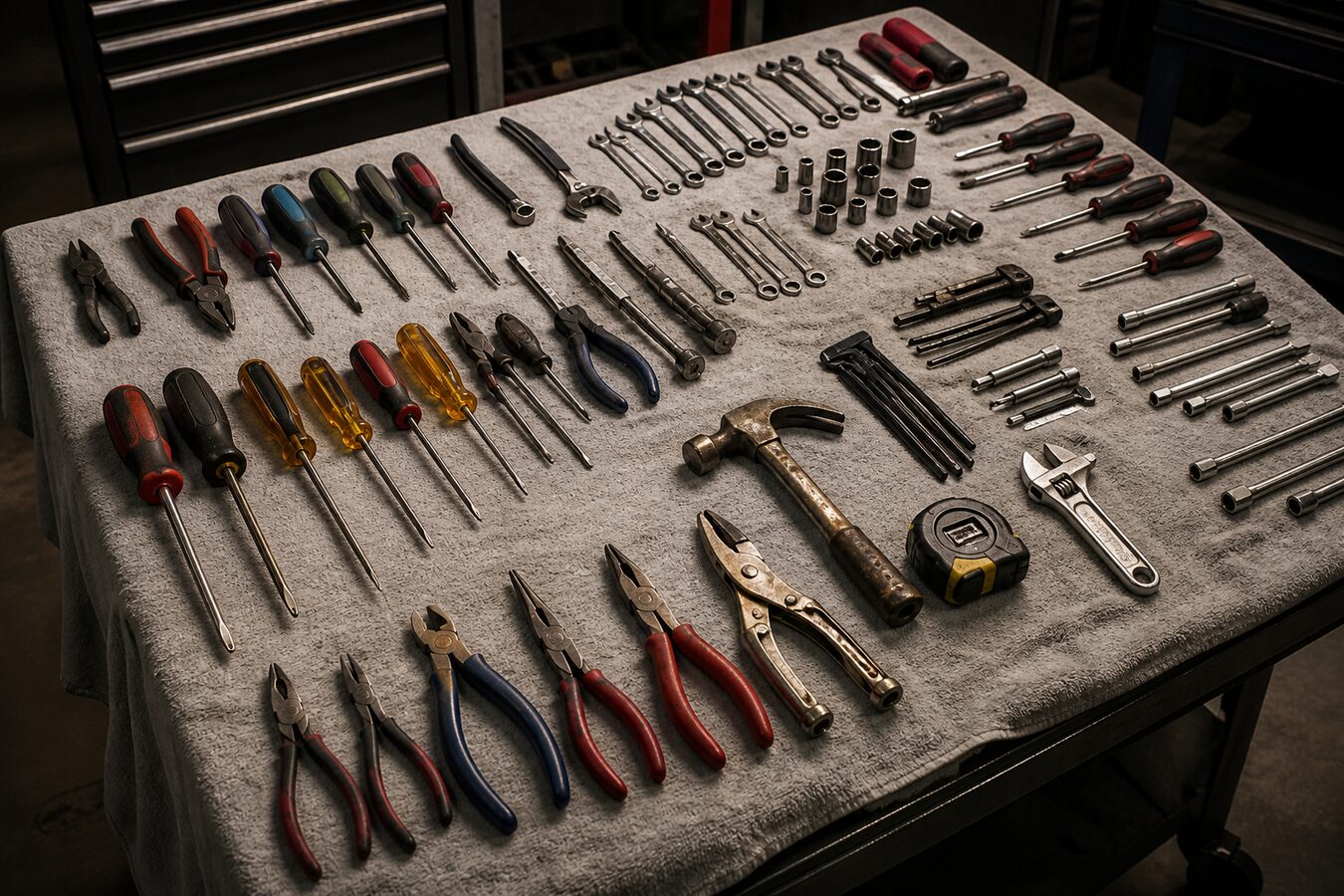
Empty the entire drawer onto a towel
Dump everything out at once rather than sorting item by item inside the drawer — seeing the full contents together is what reveals duplicates and makes the scale of the problem clear.
-
Group by function, not by type
Sort into rough categories: cutting tools, fastening tools, measuring tools, batteries and small electronics, miscellaneous hardware (screws, nails, anchors). This grouping matches how you'll actually search for something later.
-
Test anything battery-powered or bladed
Check that any battery-operated tool still works and that blades aren't rusted or dulled beyond use. Anything broken or dead-battery-with-no-plan-to-replace goes in the toss pile.
-
Identify true duplicates and pick the better one
When you find two of the same tool, keep the one in better condition and set the other aside for donation or a shared household — don't keep both 'just in case.'
-
Assign each category a bin or drawer section
Use small bins or dividers so each category has one specific spot going forward — the goal is that next time you need a Phillips screwdriver, you check exactly one location.
-
Label the outside of each bin
A visible label removes the guessing that leads to re-dumping the whole drawer each time you need something specific.
-
Write down anything you're missing
While everything's sorted, note if there's a genuine gap — no working tape measure, no fresh batteries — so your next hardware store trip is based on an actual inventory instead of a guess.
Common mistakes
- Sorting inside the drawer instead of emptying it fully, which hides duplicates and makes true assessment harder.
- Keeping both duplicate tools instead of choosing the better one and passing along the extra.
- Skipping labels on the new bins, which leads back to the same disorganized pile within a few months.
- Not testing battery-powered tools, only to discover they're dead the next time you need them urgently.
- Treating this as a chance to buy new organizational products before doing the actual sort — buy bins only if you find you need them after sorting.
Variations for different budgets
Budget
Use containers you already have — small food containers, a shoebox with dividers — instead of buying new bins.
Mid-range
Buy a small set of labeled plastic bins or a drawer divider insert sized to the actual drawer.
Splurge
Install a proper tool chest or wall-mounted pegboard system if the audit reveals you need more storage than the drawer can hold.
Practical considerations
Handle blades and sharp tools carefully while sorting, and dispose of old batteries at a proper collection point rather than in household trash.
What's actually worth keeping
- Keep: tools you can name a specific past use for, duplicates in genuinely different sizes, anything under warranty or still in original packaging
- Toss or donate: anything rusted beyond function, tools for a project you've decided you're not doing, three or more of the exact same size screwdriver
- Unsure: set aside in a labeled box for 6 months — if untouched, it's safe to let go
Disposing of batteries and old tools safely
Household batteries (especially lithium and rechargeable types) should not go in regular trash — many hardware stores and municipal collection sites accept them for free recycling. Old paint cans, solvents, and sharp blades usually need a household hazardous waste drop-off rather than curbside pickup.
Sources & further reading
Printable checklist
The Tool Drawer Truth Session